
Morgan Rushworth PBXS CNC Hydraulic Press Brake Range

The Morgan Rushworth PBXS is Selmach’s premium CNC hydraulic press brake range for demanding fabrication and production bending. Specify the machine around your components: bending force and length, tooling access, backgauge movements, control package and handling requirements all influence the right configuration.
Whether you manufacture varied subcontract components, repeated multi-bend parts or longer plate fabrications, Selmach can assess your drawings and propose a PBXS package for comparison and quotation. Send us your material details, bend lengths and required tolerances to begin a model-specific assessment.




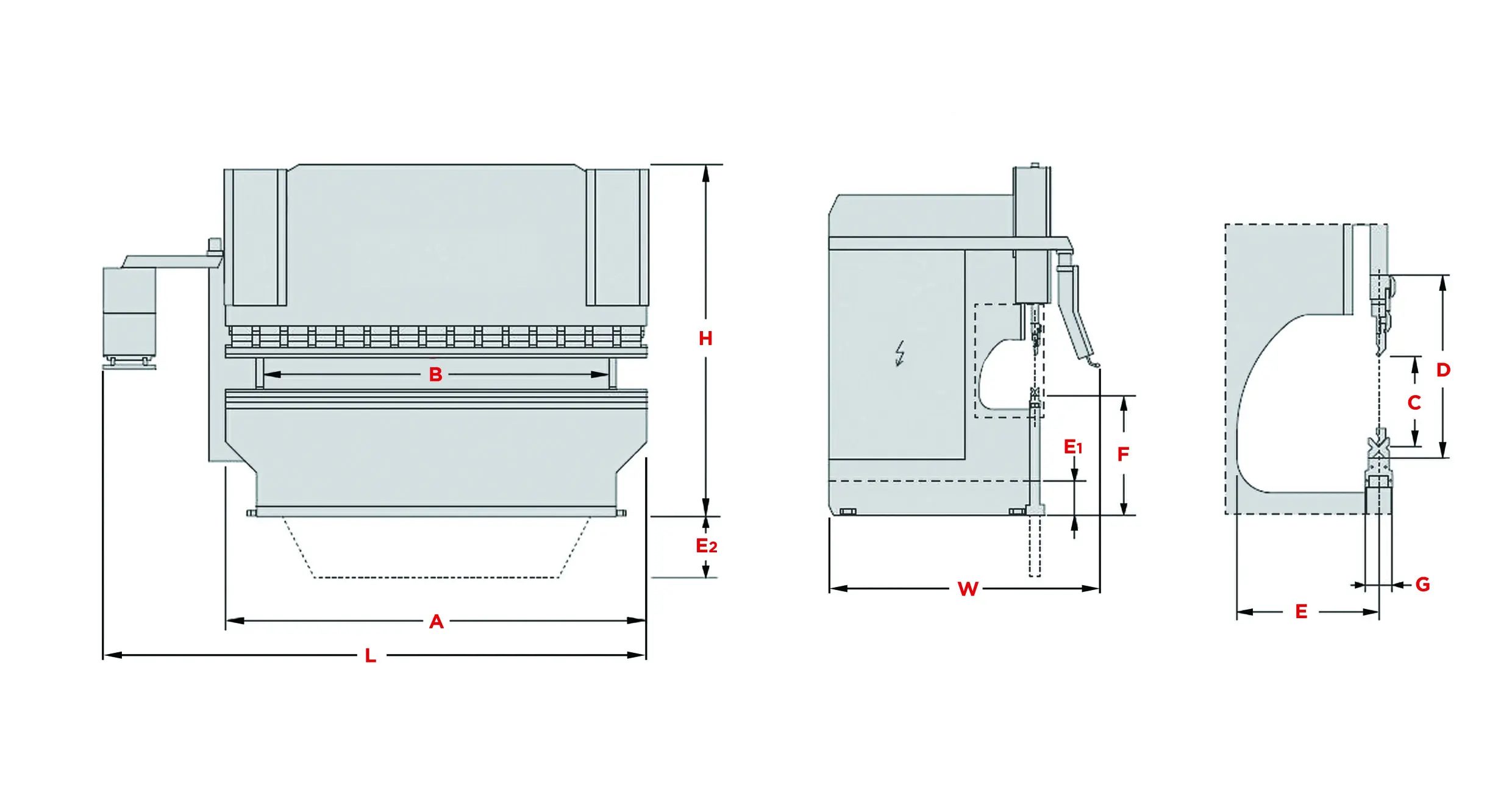
| Model | Stock Code | Bending Power Tonne | Bending Length A mm | Dist. Between Column B mm | Y Rapid Speed mm/sec | Y Working Speed mm/sec | Y Return Speed mm/sec | Travel in X Axis mm | Speed of X Axis mm/sec | Travel in R Axis mm | Speed of R Axis mm/sec | Number of Backgauge Fingers | Number of Sheet Support Arms | Oil Capacity Litre | Motor Power kW | Stroke C mm | Daylight D mm | Throat Depth E mm | Table Height F mm | Table Width G mm | Pit Depth 1 E1 mm | Pit Depth 2 E2 mm | Length L mm | Width W mm | Height H mm | Weight kg |
| PBXS 1250/60 | M5265 | 60 | 1250 | 1070 | 150 | 10 | 130 | 750 | 350 | 160 | 240 | 2 | 2 | 80 | 5.5 | 260 | 530 | 460 | 850 | 60 | – | – | 2310 | 1855 | 2610 | 5000 |
| PBXS 2100/80 | M5290 | 80 | 2100 | 1600 | 150 | 10 | 130 | 750 | 350 | 160 | 240 | 2 | 2 | 140 | 7.5 | 260 | 530 | 460 | 880 | 60 | – | – | 2860 | 1950 | 2595 | 6500 |
| PBXS 2600/110 | M5291 | 110 | 2600 | 2050 | 150 | 10 | 130 | 750 | 350 | 160 | 240 | 2 | 2 | 140 | 7.5 | 260 | 540 | 410 | 880 | 90 | – | – | 3350 | 1600 | 2605 | 7100 |
| PBXS 3100/110 | M5292 | 110 | 3100 | 2550 | 160 | 10 | 130 | 750 | 330 | 160 | 240 | 2 | 2 | 140 | 11 | 260 | 540 | 460 | 880 | 90 | – | – | 3810 | 1950 | 2905 | 8700 |
| PBXS 3100/150 | M5293 | 150 | 3100 | 2550 | 160 | 10 | 130 | 750 | 330 | 160 | 240 | 2 | 2 | 210 | 15 | 260 | 540 | 460 | 880 | 90 | – | – | 3850 | 1950 | 2905 | 10000 |
| PBXS 3100/190 | M5294 | 190 | 3100 | 2550 | 150 | 10 | 130 | 750 | 350 | 160 | 240 | 2 | 2 | 210 | 18.5 | 260 | 530 | 460 | 880 | 90 | – | – | 3850 | 1950 | 2905 | 10400 |
| PBXS 3100/240 | M5208 | 240 | 3100 | 2550 | 130 | 10 | 120 | 750 | 350 | 160 | 240 | 2 | 2 | 210 | 22 | 260 | 530 | 500 | 880 | 90 | – | – | 3850 | 1950 | 2905 | 11400 |
| PBXS 3100/320 | M5321 | 320 | 3100 | 2550 | 110 | 8 | 100 | 750 | 350 | 160 | 240 | 2 | 2 | 280 | 22 | 320 | 660 | 460 | 1000 | 380 | – | – | 3870 | 2175 | 3245 | 15500 |
| PBXS 3100/440 | M5256 | 440 | 3100 | 2550 | 80 | 8 | 70 | 750 | 350 | 160 | 240 | 2 | 2 | 450 | 30 | 320 | 575 | 500 | 1005 | 450 | – | – | 3850 | 2060 | 3400 | 22000 |
| PBXS 4100/150 | M5295 | 150 | 4100 | 3550 | 170 | 10 | 120 | 750 | 330 | 160 | 240 | 4 | 4 | 210 | 15 | 260 | 530 | 460 | 880 | 90 | – | – | 4830 | 1950 | 2905 | 12500 |
| PBXS 4100/190 | M5296 | 190 | 4100 | 3550 | 160 | 10 | 110 | 750 | 330 | 160 | 240 | 4 | 4 | 210 | 18.5 | 260 | 530 | 460 | 880 | 90 | – | – | 4830 | 1950 | 2905 | 12700 |
| PBXS 4100/240 | M5217 | 240 | 4100 | 3550 | 150 | 10 | 100 | 750 | 350 | 160 | 240 | 4 | 4 | 210 | 22 | 260 | 530 | 460 | 880 | 90 | – | – | 4850 | 1950 | 2905 | 14000 |
| PBXS 4100/320 | M5327 | 320 | 4100 | 3550 | 120 | 8 | 90 | 750 | 350 | 160 | 240 | 4 | 4 | 280 | 22 | 320 | 635 | 500 | 1000 | 280 | – | – | 4870 | 2175 | 3200 | 19000 |
| PBXS 4100/440 | M5219 | 440 | 4100 | 3550 | 90 | 8 | 70 | 750 | 350 | 160 | 240 | 4 | 4 | 450 | 30 | 320 | 580 | 500 | 1000 | 380 | – | – | 4830 | 2390 | 3350 | 27000 |
| PBXS 6100/150 | M5297 | 150 | 6100 | 5100 | 140 | 10 | 100 | 750 | 330 | 160 | 240 | 4 | 4 | 240 | 15 | 260 | 510 | 500 | 1000 | 90 | – | – | 6850 | 1650 | 2850 | 20000 |
| PBXS 6100/240 | M5221 | 240 | 6100 | 5100 | 140 | 10 | 100 | 750 | 330 | 160 | 240 | 4 | 4 | 300 | 22 | 260 | 500 | 500 | 1100 | 90 | – | – | 7000 | 2255 | 3090 | 25500 |
| PBXS 6100/320 | M5333 | 320 | 6100 | 5100 | 120 | 8 | 70 | 750 | 330 | 160 | 240 | 4 | 4 | 300 | 22 | 320 | 580 | 500 | 1185 | 200 | – | – | 7000 | 2550 | 3705 | 30500 |
| PBXS 6100/380 | M5223 | 380 | 6100 | 5100 | 90 | 8 | 70 | 750 | 330 | 160 | 240 | 4 | 4 | 450 | 30 | 320 | 570 | 500 | 1100 | 240 | – | – | 6850 | 2210 | 3255 | 35000 |
| PBXS 6100/440 | M5224 | 440 | 6100 | 5100 | 90 | 8 | 70 | 750 | 330 | 160 | 240 | 4 | 4 | 450 | 30 | 320 | 520 | 500 | 1100 | 280 | – | – | 7040 | 2170 | 3775 | 39500 |
| PBXS 6100/600 | M5226 | 600 | 6100 | 5100 | 80 | 7 | 70 | 750 | 330 | 160 | 240 | 4 | 4 | 500 | 37 | 360 | 620 | 500 | 1050 | 380 | – | – | 7040 | 2375 | 4240 | 56000 |
Features
- ESA S875 multi-axis CNC control with numerical and 2D graphical programming and 2D or 3D visualisation, mounted on pendant arm
- Ideal for complex multi bending operations, especially where volume production with accurate repeatability is required
- Fully synchronised CNC control for left and right upper beam cylinder position – Y1 + Y2 axis
- CNC control for backgauge depth – X axis
- CNC control for backgauge height – R axis
- Manual side to side adjustment of backgauge fingers – Z axis
- AKAS laser tooling guards for enhanced ease of use
- Euro style quick release top tool holders with intermediate pieces including wedges for crowning, Sectionalised goose neck top tool and multi vee bottom die
- Strong rigid welded mono block frame able to withstand deflection under maximum load
- High precision linear scales for measurement of stroke depth mounted on side frames rather than top beam to prevent any distortion in accuracy as beam
comes under load - Hydraulic ram travel guided in low friction slideways
- Large open height and generous ram stroke
- Deep reinforced throat in side frames
- High approach and return speeds for production bending
- Front support arms with flip stop, adjustable on a linear rail
- Dual foot switch console with emergency stop
- Electrically interlocked side guards
- Electrically interlocked rear access door
Options
- Cybelec ModEva 12S 3D graphical CNC control
- Cybelec ModEva 15S 3D graphical CNC control
- Cybelec ModEva 15S 3D graphical touchscreen CNC control
- Delem DA66W 2D graphical CNC control
- Delem DA66T 2D graphical touchscreen CNC control
- Delem DA69W 3D graphical CNC control
- Delem DA69T 3D graphical touchscreen CNC control
- X1 + X2, R1 + R2, Z or Z1 + Z2 axes
- Additional Back Gauge Finger X Axis Backgauge
- Additional Back Gauge Finger X, R Axis Backgauge
- Hydraulic Release Top and Bottom Tooling Clamping System
- Mechanical anti deflection table
- CNC motorized anti deflection table
- Brush table for front support arms
- Additional sliding front support arms
- Sheet follower support arms controlled by the CNC
- Parking area for sheet follower support arms – one per side
- Laser Angle Measuring System
Morgan Rushworth PBXS CNC Hydraulic Press Brake
The Morgan Rushworth PBXS is a premium CNC hydraulic press brake for manufacturers requiring precise bending, flexible programming and a robust machine for demanding production work. Supplied and supported in the UK by Selmach Machinery, it combines a rigid monoblock frame, synchronised ram control and configurable backgauge, tooling and programming options.
The PBXS is Morgan Rushworth’s flagship hydraulic press brake range. It should be considered when comparing premium CNC press brakes for subcontract fabrication, sheet-metal components, cabinets, enclosures and larger fabricated assemblies. Selecting the right configuration means matching the machine’s capacity, working clearance, control and tooling to the components you manufacture.
CNC Control and Programming
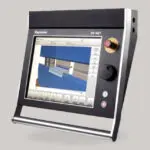
The PBXS is supplied with an ESA S875 CNC controller as standard, featuring a 21-inch touchscreen with numerical and 2D graphical programming. Operators can prepare bending programmes, manage tooling information and recall saved jobs.
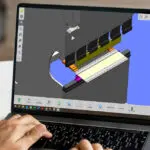
Offline programming allows programmes to be prepared on a PC, helping move preparation away from the machine. Software functions, visualisation and data-import capabilities depend on the selected controller and software package.
Alternative controller options include Cybelec ModEva 12S and ModEva 15S, and Delem DA66W, DA66T, DA69W and DA69T, subject to the selected machine configuration and current availability.
These alternatives allow businesses to specify a familiar programming environment or functions suited to their components and production workflow. Selmach can help compare the available packages, including graphical programming, touchscreen operation, bend simulation and offline software.
Four-Axis CNC Control as Standard
The PBXS provides four CNC-controlled axes as standard: Y1 and Y2 control the left and right ram cylinders, X controls backgauge depth, and R controls backgauge height.
Synchronised Y1 and Y2 control maintains the programmed ram position, while the X and R axes position the backgauge for each bend. CNC-controlled backgauge height allows vertical positioning to be incorporated into the bending programme, reducing manual adjustment between operations.
For components requiring more advanced positioning, optional backgauge configurations include:
- X1 + X2: independent depth positioning of the backgauge fingers, useful for angled edges and components requiring different gauging depths.
- R1 + R2: independent height positioning of the backgauge fingers, useful where gauging points are at different heights.
- Z or Z1 + Z2: CNC-controlled lateral positioning of the backgauge fingers, reducing manual repositioning between bends and jobs.
The backgauge fingers are manually positioned laterally in the standard configuration. Optional axis arrangements are specified to suit the component geometry and production requirements; they are configuration choices rather than upgrades every application needs.
Selmach can review representative drawings and components to recommend the appropriate backgauge arrangement for your PBXS.
Frame Strength and Working Clearance
A welded monoblock steel frame provides a rigid foundation for bending under load. Linear scales mounted on the side frames measure ram position, while the hydraulic ram runs in low-friction guideways.
The range offers generous working clearance, with stroke, daylight and throat depth varying by model. These dimensions are particularly important when forming deep boxes, tall flanges and components that must be repositioned around the tooling during a multi-bend sequence.
Suitability for a component depends on the complete combination of machine geometry, tooling and bend sequence. For demanding parts, Selmach can review these factors with you before recommending a configuration.
Tooling, Crowning and Component Support
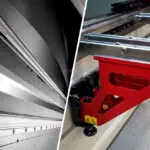
The PBXS is supplied with Euro-style quick-release top tool holders, sectionalised gooseneck top tooling and a multi-V bottom die.
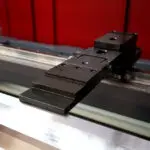
An optional hydraulic-release top and bottom tooling clamping system reduces the manual work involved in releasing and securing tooling. This is particularly relevant for manufacturers regularly changing tool layouts between components or batches.
The tooling and clamping package should be selected around your component geometry, changeover frequency and any existing tooling you intend to use.
Crowning and Bend Consistency
Optional mechanical and CNC motorised anti-deflection tables, also known as crowning systems, compensate for machine deflection under bending load. Correctly set crowning helps maintain a consistent bend angle along the component, particularly on longer bends.
A CNC motorised system allows crowning adjustment through the control, reducing manual setup work when moving between jobs.
An optional laser angle-measuring system provides angle measurement during bending. It is particularly relevant when assessing production requirements involving material variation, springback and tight angle tolerances. Selmach can explain the measurement and correction functions available with the selected machine and controller package.
Backgauge Fingers and Component Positioning
Additional backgauge fingers are available for X-axis and X/R-axis backgauge arrangements, providing further gauging points where the component requires them.
These options complement the standard four-axis CNC control and the optional independently controlled backgauge configurations. The number and arrangement of fingers should be selected to suit the component’s size, shape and gauging surfaces.
Sheet Support and Handling
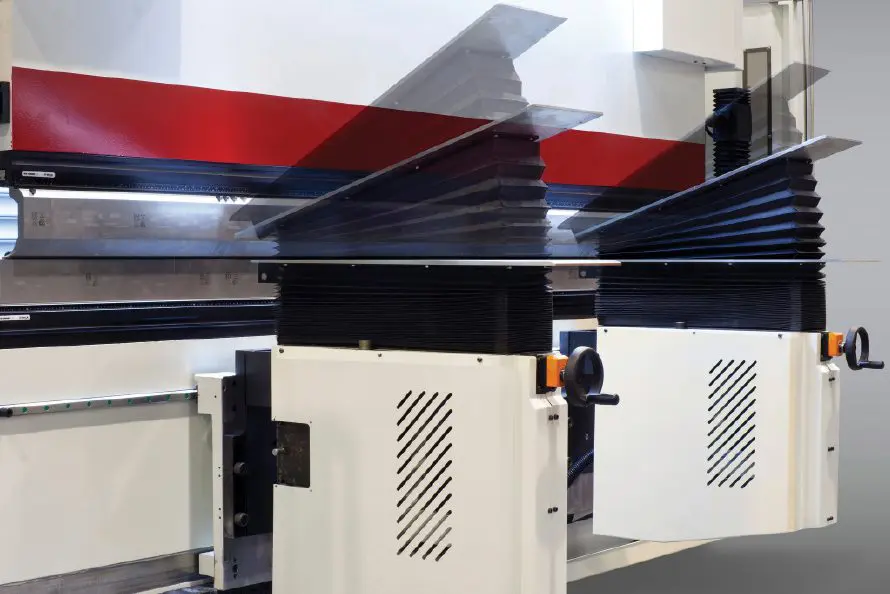
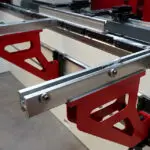
Standard front support arms are adjustable along a linear rail. Optional additional sliding front support arms provide further support positions, while brush tables for the front support arms can help protect component surfaces during positioning.
For suitable larger components, optional CNC-controlled sheet follower arms support the sheet as it rises during bending, reducing the amount of manual support required from the operator. Their suitability depends on the component’s dimensions, weight and bending sequence.
Optional parking areas, one on each side of the machine, allow the sheet follower arms to be moved clear when they are not required.
Selmach can review representative parts to recommend the appropriate combination of front supports, sheet followers and backgauge equipment.
Capacity for a Broad Range of Applications
The published PBXS range covers bending forces from 60 to 600 tonnes and bending lengths from 1,250 to 6,100 mm. The specification table on this page provides the current model-by-model capacities and dimensions.
Required bending force depends on material type, thickness, bend length and die opening. Machine selection should also account for tooling capacity, access between the columns, working clearance and component handling.
Whether your work involves short batches, repeat components or large fabricated parts, Selmach can help identify a PBXS configuration suited to the application.
UK Support from Selmach Machinery
Selmach supports the PBXS with machinery advice, tooling assistance and UK service support. Training, maintenance and service-plan requirements can be discussed alongside the machine specification.
When comparing suppliers, assess the complete package: machine configuration, tooling, software, installation, training and ongoing support. This provides a more useful comparison than tonnage or headline machine specifications alone.
Keep the machine’s model, serial number, controller details and fault description available when requesting assistance. Selmach’s service route covers warranty enquiries, breakdown call-outs, preventative maintenance and spare parts. Photographs and clear production symptoms help route the enquiry to the relevant engineer.
Discuss maintenance cover around your utilisation. Our Service Plan comparison lists available remote support, scheduled visits and call-out provision by level. The published plans assume single-shift operation; multi-shift or 24/7 requirements can be assessed with adjusted contracts. The priority call-out commitment is conditional: next business day where a required visit is confirmed by 15:00, under the relevant plan and eligibility terms.
For a new PBXS quotation, ask us to itemise commissioning, operator/programmer training, warranty and planned-maintenance scope. The purchase package and Service Plan are separate offers unless the quotation expressly includes them.
Discuss Your PBXS Requirements
Send Selmach your material types, thicknesses, maximum bend length and representative component drawings. Include any deep boxes, return bends or handling challenges that influence machine selection.
Our team can help specify the PBXS model, controller, backgauge and tooling package for your production requirements, and discuss a demonstration using representative parts.
Contact Selmach to discuss your PBXS configuration or request a quotation.



General Sheet Metal Press Brake Maintenance
21st October 2026
Bending aluminium: alloy, radius and marking considerations
21st October 2026
Bending stainless steel: repeatability and surface finish
21st October 2026
Supporting heavy components at the press brake
21st October 2026
New CNC press brake or used premium machine: a practical comparison
21st October 2026
What affects the cost of a CNC press brake package?
21st October 2026
Reducing press brake setup time in mixed and repeat production
21st October 2026
How to assess CNC press brake accuracy before buying
21st October 2026
Choosing a press brake for boxes, channels and return flanges
21st October 2026
Press brake tooling: selecting punches and dies for real components
21st October 2026
Press brake crowning: maintaining consistent angles along long bends
21st October 2026
Press brake tonnage and V-die selection: assess the whole bend
21st October 2026
Choosing a press brake controller and offline programming package
21st October 2026

Choosing a CNC press brake backgauge for complex components
21st October 2026
Press brake axes explained: choosing the movements your components need
21st October 2026
From Fibre Laser to Press Brake Removing the Next Production Bottleneck
13th October 2026
CNC Machine Running Costs: What to Include in the Comparison
30th September 2026
Before a CNC Machine Arrives: CAD/CAM and Training Checklist
30th September 2026

How to Program Tooling on the ESA 875 Press Brake Controller
6th October 2025
Mastering the Fundamentals of Metal Bending
25th September 2025

Don’t Let Downtime Derail You: The Importance of Maintenance
3rd April 2025

Referencing your CNC Press Brake using ESA Controls
5th October 2018

Parking your CNC Press Brake using ESA Controls
5th October 2018

Referencing of CNC Press Brakes when switched off with beam up
5th October 2018

The Advantages of Slowing Down the Folding / Bending Speed on your Press Brake
12th January 2018
How to perform bump bending on a Morgan Rushworth Sheet Metal Press Brake
19th September 2017

Can you justify a CNC press brake for small batch work
21st August 2017
How to set up your Press Brake Tool Alignment Correctly
21st October 2016

Tips and Tricks on Press Brake Safety FAQ
21st October 2016

How to Set the Laser Guards On The Morgan Rushworth Press Brake After You Have Changed Your Top Tooling
21st October 2016
Product Specific Case Studies

MMK Engineering – Bringing Profiling In-House
13th October 2023
MMK Engineering Ltd, based in Devon, work across the full spectrum of engineering, from designing small components to assembling entire.. More
HMS Engineering – Streamlining their timelines, by bringing processes in-house
2nd December 2022
HMS Engineering (Hereford) Ltd, based in Hereford, are the masterminds behind a wide range of incredible engineering projects, including a.. More
Related Case Studies

Teknoroof – Expanding capacities and capabilities
6th February 2024
Teknoroof is a specialist manufacturer of steel and aluminium roof and canopy products, to service the UK's ever-growing construction industries, based in Northamptonshire. We spoke to Adrian Stickley, the Operations Manager,.. More
MMK Engineering – Bringing Profiling In-House
13th October 2023
MMK Engineering Ltd, based in Devon, work across the full spectrum of engineering, from designing small components to assembling entire end-use products and machinery. We spoke to Rob Jeffrey, Design.. More

Pembrokeshire College adds to their collection
26th April 2023
Pembrokeshire College is a provider of a wide range of Post-16 study options in South-West Wales, including an impressive set-up for Engineering based courses with their new Welding and Fabrication.. More

MR Industrial Services continued success with the help of Selmach Machinery
6th September 2022
MR Industrial Services, based in Corby, Northamptonshire supply a range of architectural and industrial steelwork to the construction industry. We spoke to Carl Peters, Martyn Nimmo and William Adams to.. More

Facade and Cladding Solutions expand and upgrade their machinery
22nd June 2022
Our customer Facade and Cladding Solutions spoke to us about their experiences buying a range of machines from us here at Selmach, including a Press Brake, Guillotine, Steelworker and Corner.. More
Colchester Institute equips trainees with press brake knowledge
11th February 2020
The institute’s training centre aims to equip students with real experience in the use of manufacturing tools and machinery. Chris spoke to us about his experience in purchasing the pressbrake... More

Pembrokeshire College apprentices experience the engineering industry with the Morgan Rushworth press brake
5th March 2019
The college purchased the Morgan Rushworth Press Brake for the purpose of giving apprentices this experience. We spoke to the Curriculum Area Manager for Mechanical Engineering and Marine, about the.. More

E B Hayward seek a press brake to replace their vintage model
5th December 2018
We caught up with Simon Hayward to find out what kind of experience he had in purchasing his Morgan Rushworth pressbrake from Selmach, and what impact it has had on.. More
S.W Asgood Engineering sees a 20% increase in production
15th November 2018
We spoke to Richard Waterman about their recent purchase of a guillotine and a pressbrake... More

New machines help to ease increased workload
30th October 2018
We spoke to Gary Yates of Mouland and Yates about their recent purchase of a press brake and guillotine from Selmach... More

Shipbuilders Intermarine increases productivity with a press brake
21st October 2018
We spoke to Craig Didio about the company’s recent experience of purchasing a large plasma, sheet rolls and a press brake from Selmach... More

GMet Ltd encourage new business with Press Brake purchase
18th September 2018
G-Met Ltd recently purchased a Morgan Rushworth press brake from Selmach. We spoke to Geoff to find out about their experience of buying the press brake and how it had.. More
Ron James Welding increase their capacity
5th August 2018
A lifelong fan of Morgan Rushworth machines, we talked to Ron about his recent purchase of a Pressbrake and Guillotine from Selmach, with whom he has been doing business with.. More
Medfab modernise their cutting and folding process
16th February 2018
MedFab has been a customer of Selmach for many years and have purchased many products from them - most recently a Press Brake and a Guillotine. We spoke to Kevin.. More
Frequently Asked Questions
Which CNC axes are standard on the PBXS?
The standard PBXS has four CNC-controlled axes: Y1 and Y2 control the two ram positions, X controls backgauge depth and R controls backgauge height. Side-to-side positioning of the standard backgauge fingers is manual. Additional independently controlled axes can be specified for more demanding components.
Which controller is supplied with the PBXS?
The standard controller is the ESA S875 with a 21-inch touchscreen. It provides numerical and graphical programming for setting up bending work. Offline programming and additional functions should be specified with the required software package, so the quoted configuration matches how you intend to prepare jobs.
How do I choose the right PBXS tonnage and bending length?
Start with your longest bend, material grade, thickness, required radius and proposed tooling. Tonnage must be assessed for the actual bend, while working length determines whether the component fits. Send representative drawings and expected quantities so Selmach can recommend a suitable model and allowance for future work.
Can the PBXS produce deep boxes and return flanges?
It can be specified for complex folded components, but suitability depends on the complete bend sequence and available clearance. Throat depth, daylight, stroke, tooling height and backgauge access all need checking. A drawing review is more reliable than selecting a machine only by tonnage or overall bending length.
What is the difference between PBXS crowning and laser angle measurement?
Crowning compensates for deflection along the bending length; laser angle measurement checks the bend angle and provides feedback with the appropriate system. They address different sources of variation. Mechanical or CNC crowning and laser measurement should be specified as required, rather than treated as interchangeable features.
Which PBXS options can help with complex or heavy parts?
Options include additional backgauge axes, hydraulic tooling clamping, extra supports and CNC sheet followers. The useful combination depends on the component, tooling and changeover pattern. For example, better sheet support may matter more for a large panel than adding axes that its bend sequence does not require.
Can PBXS machines work together in a tandem installation?
Yes. Selmach can assess bespoke tandem and larger multi-machine arrangements for unusually long components. The system is designed around the required bending force, length, handling and synchronised operation; it is not simply a matter of placing two standard machines side by side. Independent operation can also be considered in the project design.
Can I arrange servicing and a Service Plan for the PBXS?
Yes. Selmach provides servicing and offers optional Service Plans for the PBXS. Ask us to quote a plan around your machine and production hours. Servicing frequency, support and call-out provision depend on the selected cover and agreed terms; a Service Plan is separate from the machine purchase unless expressly included.