TUBE AND SECTION LASER

CUTTING MACHINES UK

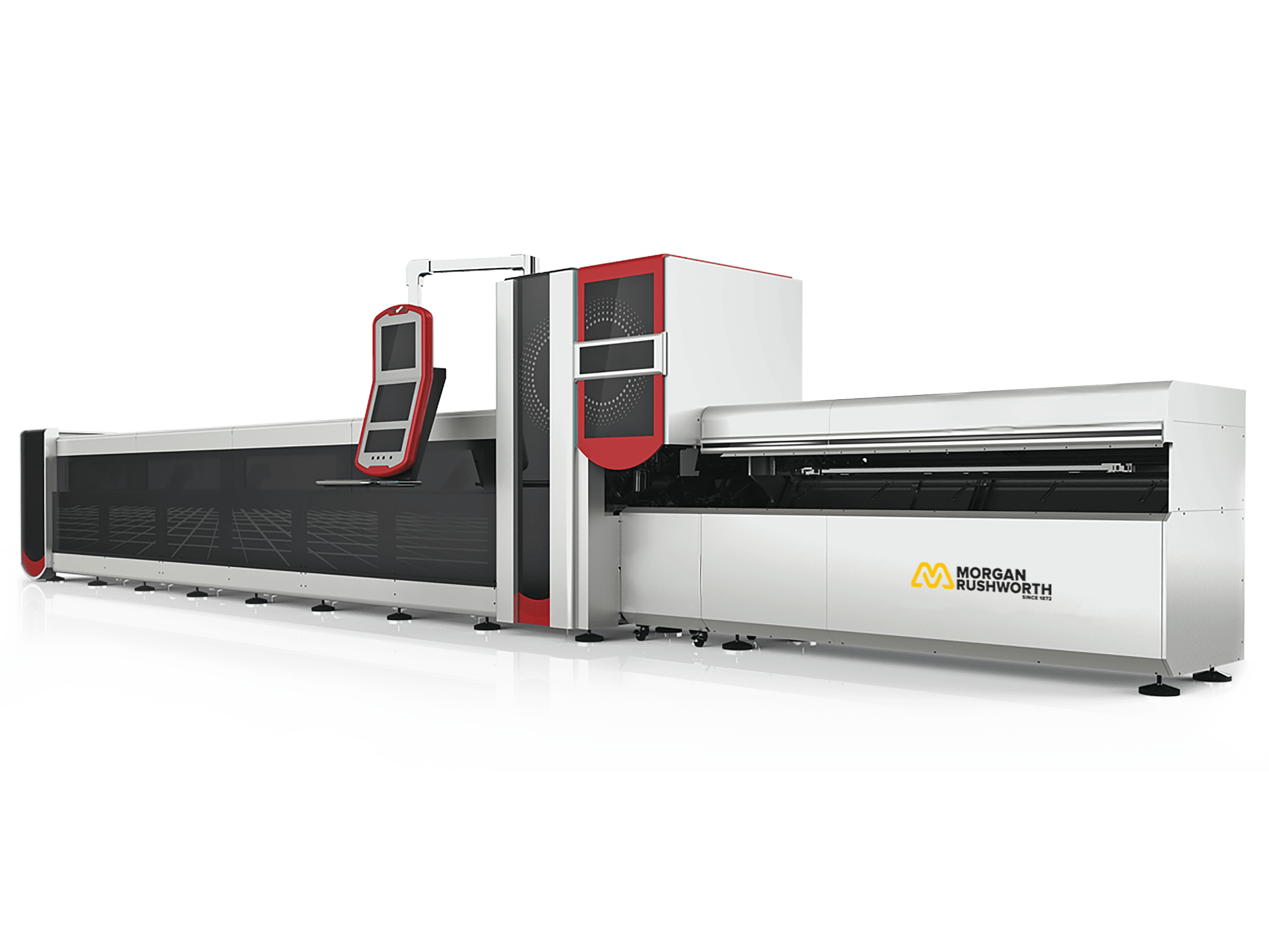
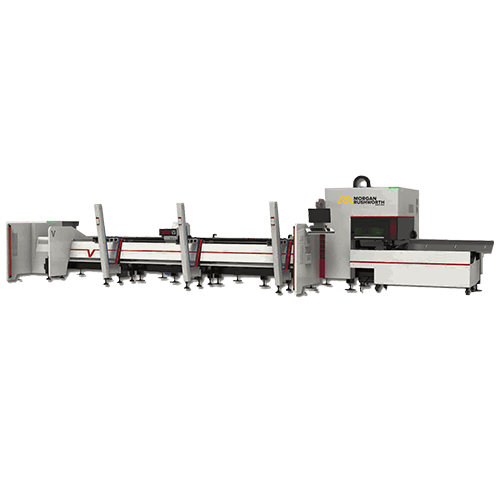
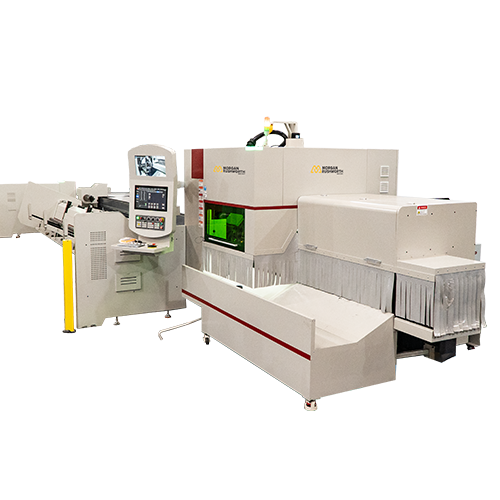
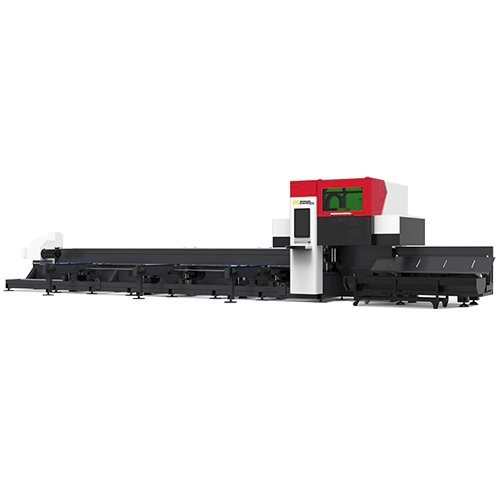
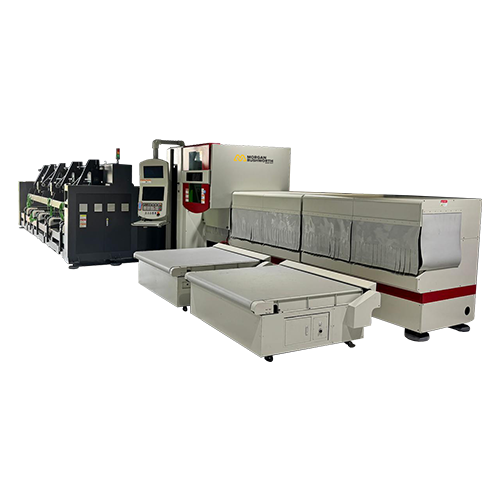
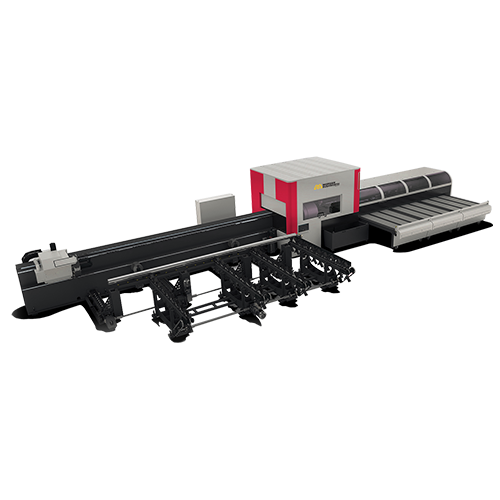
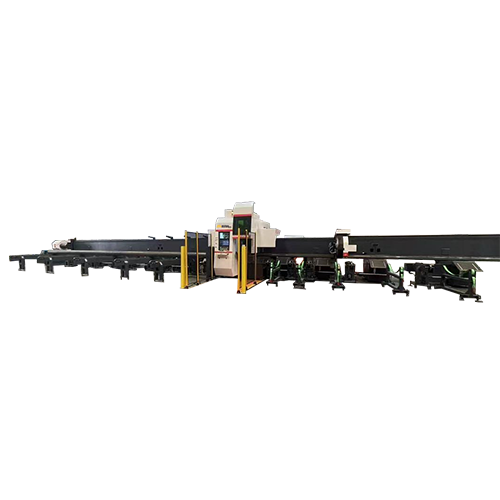
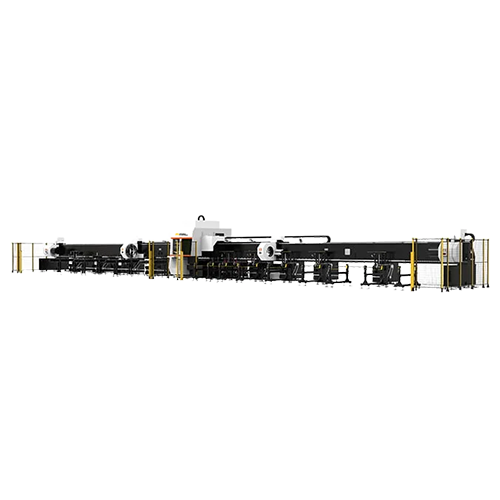
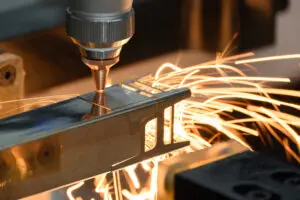
Tube and profile laser cutting has become a core capability for modern fabrication, giving workshops cleaner cuts, tighter tolerances and far greater production speed. Selmach supplies a versatile range of Morgan Rushworth CNC fibre tube and section laser cutting machines for manufacturers across the UK, built to handle round, square and rectangular tube as well as beam, channel, angle and other open profiles.

Each installation is supported by our experienced engineering team, ensuring you choose a system that fits your materials, workflow and long-term production goals.

Laser Power
Up To
20kW
Laser Power
Maximum Cutting Width
Up To
12m
Infeed
Maximum Chuck Diameter
Up To
630mm
Chuck Diameter
Optional Extras
Up To
5
Axis Bevel Cutting
Morgan Rushowrth XTM Tube Fibre Laser

WHY CHOOSE A MORGAN RUSHWORTH TUBE LASER?

Morgan Rushworth offers more than just machines. It delivers complete solutions, backed by expertise, experience and support you can rely on.

150+ Years of Engineering Excellence

Supporting UK manufacturers since 1872.

Installation & Training Included

Factory-trained engineers ensure your machine is operational from day one.

UK Service & Parts Support

Nationwide support and spare parts availability for complete peace of mind.

WHAT CAN A TUBE LASER CUT?

Our tube lasers process a wide range of tube, section and structural profiles with precision and efficiency.

Round Tube, Square Tube, Rectangular Tube, Oval Tube, Channel, Angle Iron, I-Beam, H-Beam, Custom Profiles and more!

Tube Laser Profiles
150 YEARS OF EXCELLENCE

MORGAN RUSHWORTH HAS AN
ENVIABLE HERITAGE.

Morgan Rushworth has been at the heart of British manufacturing since 1872. Today, we continue that legacy with advanced CNC fibre laser technology built for the modern world.

1872
Rushworth & Co Established
A historic British engineering machinery name, established during the growth of UK manufacturing.
1972
Joining Forces
A.J.Morgan & Sons (Est. 1906) merges with Rushworth & Co to establish Morgan Rushworth.
Today
Advanced fibre laser technology
The range now includes high-performance CNC fibre laser systems for modern sheet metal and tube processing.

CHOOSE YOUR TUBE AND SECTION LASER SOLUTION

Use these filters to explore our range, and narrow down the selection that best suits your requirement.

Not sure what you need? Speak to a specialist today.

Choose the type of tube and section processing that best reflects your application, then refine the results using the capacity filters.
Select the minimum chuck diameter required for your application. Machines with a larger available chuck capacity will also be shown.
Select the minimum raw material length you need to process. Machines capable of handling a greater material length will also be shown.
Select the minimum finished component length you need to accommodate. Machines capable of a greater outfeed length will also be shown.
Select the required fibre laser source power. Available power options vary between machine ranges.
Morgan Rushworth XTC compact tube laser Compact Tube & Box Section

XTC Compact Tube Laser

A compact footprint machine designed for processing small diameter tubes and profiles, with a zero-scrap waste system.

250mm
Max. Chuck Diameter
7.5m
Max. Infeed
6m
Max. Outfeed
12kW
Max. Laser Power
View Machine →
Morgan Rushworth XTE compact tube fibre laser Compact Tube & Box Section

XTE Compact Tube Fibre Laser

A compact tube laser range designed for processing smaller tubes and box section, with multiple chuck sizes and material handling configurations available.

250mm
Max. Chuck Diameter
7.5m
Max. Infeed
6m
Max. Outfeed
6kW
Max. Laser Power
View Machine →
Morgan Rushworth XTS 2 chuck compact tube fibre laser Compact Tube & Box Section

XTS 2-Chuck Compact Tube Fibre Laser

A versatile two-chuck tube laser for compact tube and box section processing, with chuck capacities up to 360mm.

360mm
Max. Chuck Diameter
7.5m
Max. Infeed
6m
Max. Outfeed
6kW
Max. Laser Power
View Machine →
Morgan Rushworth XTM tube laser High-Speed Production

XTM Tube Laser

Designed for high-speed production of small to medium-sized tubes and box section, combining strong cutting performance with flexible material handling.

360mm
Max. Chuck Diameter
7.5m
Max. Infeed
6m
Max. Outfeed
12kW
Max. Laser Power
View Machine →
Morgan Rushworth XTR tube fibre laser High-Speed Production

XTR Tube Fibre Laser

A high-speed production tube laser for small to medium-sized tubes and box section, with material lengths up to 8 metres.

220mm
Max. Chuck Diameter
8m
Max. Infeed
8m
Max. Outfeed
6kW
Max. Laser Power
View Machine →
Morgan Rushworth XTL 3 chuck section and tube laser Large Sections, Beams & Tubes

XTL 3-Chuck Section & Tube Laser

A heavy-duty three-chuck tube laser designed for processing large sections, beams and tubes, with chuck capacities up to 630mm.

630mm
Max. Chuck Diameter
12m
Max. Infeed
12m
Max. Outfeed
20kW
Max. Laser Power
View Machine →
Morgan Rushworth XTH 4 chuck section and tube laser Large Sections, Beams & Tubes

XTH 4-Chuck Section & Tube Laser

A heavy-duty four-chuck tube laser developed for large section, beam and tube processing where maximum support and high-capacity material handling are required.

630mm
Max. Chuck Diameter
12m
Max. Infeed
12m
Max. Outfeed
20kW
Max. Laser Power
View Machine →
No tube laser machines match the selected requirements. Please adjust your selections or reset the filters to view the full range.

Industry Applications

NOT JUST

TUBE & SECTION.

Looking to cut sheet metal, stainless steel, aluminium or copper with exceptional speed and precision?

We offer an extensive range of Morgan Rushworth flat-bed fibre laser cutting machines for every application and budget.

Why choose Morgan Rushworth?

Laser Power
UK-BASED SUPPORT
Local service, installation and training from our expert team.
Maximum Cutting Length
HERITAGE
AND TRUST
Over 150 years of engineering excellence you can rely on.
Automated Production
PREMIUM COMPONENTS
Using leading global brands for reliability and performance.
Automated Production
BUILT TO PERFORM
Robust machines designed for precision and productivity.

HELPING YOU TO DECIDE – LASER BUYING GUIDE

Picking the right machine to suit your needs can seem like a minefield. With so many options out there, where do you begin? Different kW power, frame types, bed sizes, automation, it can seem daunting. That’s why we’ve put together a buyers guide below to help with the decision making process.

Tube and profile laser cutting brings together fibre-laser power, precision motion control and intelligent handling systems to produce clean, repeatable cuts on a huge range of materials and geometries. Understanding the core processes helps you choose the right machine for your workflow.

Fibre Laser Power & Beam Delivery

Modern tube laser machines use high-efficiency fibre laser sources, delivering a tightly focused beam capable of cutting mild steel, stainless, aluminium and other metals with exceptional speed. The beam is directed through a protective optical system and focused onto the material, producing fast, accurate cuts with minimal heat distortion. Higher power levels increase cutting speed and allow for thicker wall sections.

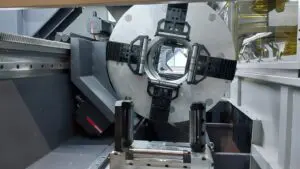
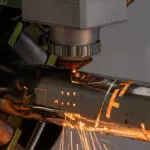
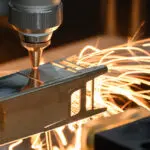
Detail of the Laser Head Cutting Tube
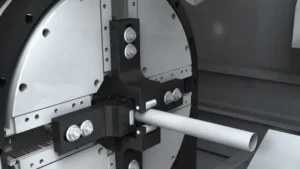
BLT Chuck internal image

Rotary Axis & Precision Clamping

A key feature of tube and profile laser cutting is the rotary axis, which grips and rotates the tube or profile during the cutting process. Precision chucks maintain constant positional accuracy, ensuring details such as slots, holes and mitres align perfectly around the circumference. For open profiles – such as angle, channel and beams – adaptive clamping systems support the profile’s geometry to maintain consistent cutting conditions.

Handling Systems for Tubes & Open Profiles

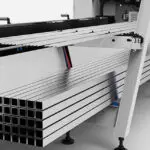
Automated loading, support rails and intelligent sensor systems help stabilise long lengths of material during cutting. These systems reduce vibration, maintain alignment and support flexible cutting of box section, RHS, CHS, angle, channel, flat-sided profiles and custom extrusions. Automation options can dramatically reduce handling time and improve overall throughput.

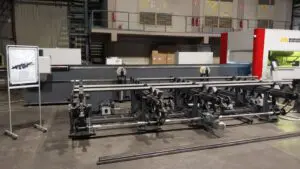
BLT Loading System
Full Stroke Chuck

Motion Control, Path Optimisation & Cutting Speed

Advanced servo motors and linear drives guide the cutting head with high precision along complex paths. Control software calculates the most efficient cutting sequence, managing lead-ins, kerf compensation and thermal balance to maintain accuracy across the full profile. This ensures consistent quality whether you’re cutting straight sections, intricate joints or repeatable batches.

Nesting & CAD/CAM Workflow

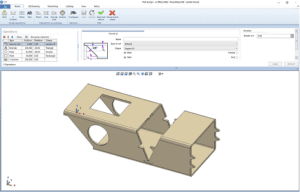
Specialised tube-nesting software allows you to import CAD files, position features accurately around the tube circumference and optimise how each piece is cut. For production environments, multi-part nesting reduces waste and maximises yield from each length. The workflow integrates directly with the machine’s control, simplifying setup and reducing programming time.

Lantek Flex 3D Software
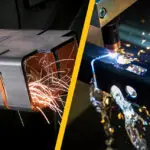
Close up of a Tube Laser Cutting

Accuracy, Tolerances & Cut Quality

Fibre lasers produce narrow kerfs, clean edges and fine detail with minimal finishing required. Consistent clamping, rotary accuracy and stable beam delivery allow tight tolerances, even on long or complex parts. When compared to mechanical cutting, sawing or plasma cutting, tube lasers offer a step change in precision, speed and repeatability.

Speed and consistency are two of the biggest challenges in metal fabrication. A Tube Laser can assist with both.

Speed is only part of the story. A modern tube laser can dramatically improve productivity by replacing multiple fabrication operations with a single automated process. Cutting, drilling, slotting, notching, mitring and weld preparation can all be completed in one cycle, reducing handling, minimising bottlenecks and improving overall workshop efficiency.

This guide explores the key areas where tube laser technology delivers measurable gains, from faster cutting speeds and reduced manual intervention to smarter nesting, improved fit-up and increased throughput across the entire fabrication process. If you’re considering how a tube laser could streamline your workflow, this article provides a practical overview of the benefits and potential return on investment.

Compact Tube Lasers bring you all the Tube Laser capabilities with a smaller footprint.

For many fabricators, investing in tube laser technology no longer means dedicating a significant portion of the workshop to a large automated production cell. Compact tube lasers offer an efficient and cost-effective solution for businesses looking to bring profile processing in-house, replace conventional fabrication methods, or increase capacity without compromising valuable floor space.

This guide explores the advantages of compact tube laser systems, including their reduced footprint, lower capital investment, simplified material handling and ability to process a wide range of tube and section profiles with exceptional accuracy. Whether you’re taking your first steps into tube laser cutting or seeking a flexible solution for low to medium production volumes, discover how a compact machine can help improve productivity whilst making the most of your available workshop space.

Tube Laser or Plasma, which is the better choice?

Both tube laser and tube plasma technologies offer significant advantages for profile processing, but selecting the right solution depends on your materials, applications and production objectives. Whilst plasma systems can provide an economical method of processing larger wall thicknesses, fibre tube lasers deliver superior cut quality, tighter tolerances and the ability to produce intricate features with minimal post-processing.

This guide examines the key differences between the two technologies, comparing cutting accuracy, edge finish, operating costs, automation capabilities and suitability for different fabrication environments. Whether you’re replacing conventional processes or investing in your first profile cutting system, understanding the strengths of each technology will help ensure you select the most productive and cost-effective solution for your business.

Picking the perfect machine

Selecting the right tube laser involves more than simply choosing a machine based on cutting capacity. Factors such as the profile types you process, maximum tube lengths, material thicknesses, production volumes and desired level of automation can all have a significant impact on determining the most suitable solution for your business.

This guide explores the key considerations when investing in tube laser technology, from manual loading systems and compact entry-level machines through to fully automated production cells capable of processing structural sections and large volumes with minimal operator intervention. Whether you’re replacing conventional fabrication processes or planning for future growth, this article will help you identify the ideal machine configuration for your applications and long-term manufacturing objectives.

If you’re still unsure, speak to our team of machinery specialists.

The Tube Laser Cutting Machine, Pros & Cons

There is no doubt that tube laser cutting has transformed the way many manufacturers process tube, box section and structural profiles. The ability to combine cutting, drilling, notching, coping and weld preparation into a single automated process can significantly increase productivity whilst improving consistency and reducing lead times. Tube lasers also offer the flexibility to process a wide range of profiles and materials with minimal setup times, making them an increasingly attractive investment for fabricators looking to modernise their production capabilities.

However, like any capital investment, tube lasers are not without considerations. The initial purchase price can be significant, particularly for larger machines equipped with automatic loading systems, bevel cutting capability and full production automation. Workshop space requirements must also be carefully assessed, as longer bed lengths and material handling systems can substantially increase the overall installation footprint. For businesses processing only small quantities of simple cut-to-length components, conventional sawing may still represent a more economical solution.

Ultimately, the suitability of a tube laser depends on production volumes, component complexity and long-term manufacturing objectives. For many businesses, the productivity gains, labour savings and reduction in secondary operations mean that a tube laser can deliver a compelling return on investment and become a key driver of future growth.

Pros

  • Consolidates multiple fabrication processes into one machine
  • Produces finished components directly from CAD data
  • Exceptional accuracy and repeatability
  • Significantly reduces manual handling
  • Eliminates many secondary operations
  • Faster production speeds and improved throughput
  • Reduced fit-up and welding preparation time
  • Flexible processing of round, square, rectangular and structural profiles
  • Automation options available for lights-out manufacturing
  • Lower work-in-progress and simplified material flow

Cons

  • Initial investment can be substantial, particularly for automated systems
  • Requires adequate workshop space, including infeed and outfeed areas
  • Fully automated loading systems increase the overall machine footprint
  • May be difficult to justify for very low production volumes or simple cut-to-length applications
  • Some applications processing extremely heavy wall sections may still favour plasma technology
  • Operators may require training to fully maximise nesting, programming and automation capabilities

Our range of machines are well suited to different use cases – explore the range:

The Morgan Rushworth tube and section laser range covers everything from compact tube processing through to high-volume production and heavy structural sections. Choosing the right range largely depends on the size and type of profiles you need to process, your production volumes and the level of material handling required.

Compact Tube Lasers

For general fabrication and businesses looking to bring tube laser cutting in-house, the XTC Compact Tube Laser, XTE Compact Tube Fibre Laser and XTS 2-Chuck Compact Tube Fibre Laser provide a versatile starting point. These machines are particularly suited to small and medium diameter tube, box section and profiles, with different chuck capacities, material lengths and configurations available across the range, with smaller footprints than most Tube Lasers to fit in tighter workshops.

MR XTE

High Production Tube Lasers

Where throughput and production efficiency become the priority, the XTM Tube Laser and XTR Tube Fibre Laser are designed for higher-volume tube and section processing. These ranges are suited to manufacturers looking to reduce cycle times, automate repetitive processing and efficiently produce larger quantities of finished components.

MR XTM

Large Sections & Beams

For structural steelwork and heavy-duty applications, the XTL 3-Chuck Section & Tube Laser and XTH 4-Chuck Section & Tube Laser extend tube laser technology into much larger sections, tubes and beams. Their three and four-chuck configurations provide additional support for large and heavy profiles, making them suited to demanding structural fabrication applications where conventional tube processing machinery may no longer offer the required capacity.

MR XTL

FREQUENTLY ASKED QUESTIONS

Tube Lasers are incredibly versatile, and suitable for virtually all profiles

Fibre tube lasers can cut round, square and rectangular tubes as well as angle, channel, beams, RHS/SHS, open profiles and custom extrusions.

They’re suitable for mild steel, stainless, aluminium and many non-ferrous materials.

While some machines are better suited to one profile than another, in general a Tube Laser can cut virtually any profile that can fit inside the chuck.

The kW power of a laser affects the thickness of material you can cut

Cutting thickness depends on laser power, typically ranging from thin-wall tubing up to heavier structural sections. For example, 2–3 kW lasers handle most fabrication work, while higher-power models tackle thicker walls at faster speeds.

Higher power machines can cut thicker materials faster, increasing throughput and reducing cost per part. While there can be a tendency in the market to encourage higher kW power, there’s a diminishing returns on higher power, and what can saved on cutting time, could be lost on higher running costs, and initial purchase costs.

Material 3kW 6kW 12kW 20kW
MS Tube 16mm 20mm 30mm 40mm
SS Tube 10mm 15mm 30mm 40mm
Aluminium Tube 6mm 15mm 30mm 35mm
Brass Tube 5mm 10mm 15mm 20mm

Typical Maximum Cutting Capacities
Actual cutting performance will vary depending on material grade, assist gas selection, cutting quality requirements and machine configuration.

Tube lasers can handle virtually any profile that will fit within the chuck

Yes. Modern CNC tube lasers include adaptive clamping and support systems that stabilise open profiles throughout the cutting process, allowing accurate cutting of angle, channel, I-beam and similar shapes.

Tube Laser Profiles

Bevel Cutting opens up a variety of cutting options on tubes, such as weld-prep edges

Many machines include bevel-cutting capabilities, allowing chamfers and weld-prep angles to be cut directly into the profile.

This reduces downstream operations and improves fit-up accuracy for fabrication and structural work.

Tube lasers offer real value in eliminating multiple processes in one pass of the material

A tube laser can replace multiple conventional fabrication processes, including bandsawing, drilling, punching, plasma cutting, marking out and some machining operations. By producing finished components directly from CAD data, manufacturers can reduce handling, improve repeatability and significantly shorten production times.

A tube laser can often eliminate or reduce:

  • Sawing / Cutting
  • Drilling
  • Punching
  • Plasma cutting
  • Marking out
  • Milling
  • Notching
  • Bevelling
  • Deburring
  • Manual grinding
  • Jigging and fit-up operations

Tube lasers can certainly replace conventional cutting of tubular materials

In many fabrication environments, a tube laser can effectively replace traditional bandsaw cutting and cold sawing operations. Whilst saws are typically limited to cutting material to length, or to an angle, a tube laser can produce fully finished components in a single automated cycle. As well as cutting round tube, box section, channel, angle and structural profiles to size, a tube laser can simultaneously produce slots, holes, coping features, mitres, cod mouth joints and other complex geometries without requiring additional handling.

By consolidating several manufacturing steps into one process, manufacturers can significantly reduce labour requirements, minimise work in progress, improve dimensional accuracy and increase throughput. This is particularly advantageous for businesses processing repeat components or producing fabricated assemblies where reducing lead times and improving consistency are key objectives.

A Tube Laser can simultaneously cut material to length, and add any holes or slots required

In many applications, Tube lasers are capable of producing accurately positioned holes, slots, elongated apertures and complex cut-outs directly into tube and section profiles during the cutting cycle. This often removes the requirement for separate drilling, punching or machining operations.

As components are processed directly from CAD or nesting software, hole positions are highly repeatable and do not rely on manual setting out or operator interpretation. For manufacturers producing handrails, agricultural equipment, architectural metalwork, furniture, structural assemblies or chassis components, this can substantially reduce production times whilst improving overall quality. Eliminating secondary drilling operations also reduces component handling and helps streamline workshop workflows.

With bevel cut parts, a Tube Laser can ensure all cut tubes are weld-prep ready, reducing welding time

One of the most significant productivity benefits of tube laser technology is its ability to improve component fit-up prior to welding. Accurate coping profiles, mitred joints and interlocking features allow fabricated assemblies to be positioned quickly and consistently, reducing the time spent adjusting and preparing parts.

Better fit-up typically results in improved weld quality, reduced distortion and less requirement for grinding or corrective work. For manufacturers producing welded assemblies in volume, this can translate into substantial labour savings and increased workshop capacity. In many cases, businesses investing in tube laser technology find that the benefits extend far beyond the cutting process itself, positively impacting fabrication, assembly and finishing operations throughout the production cycle.

Tube lasers can replace so many existing processes, that a lot of machinery can be rendered obsolete

One of the greatest advantages of tube laser technology is its ability to consolidate several conventional fabrication operations into a single automated process. Depending on the application, a tube laser can often replace cutting, drilling, punching, notching, marking out and some secondary machining operations.

Components can be produced directly from CAD data, complete with holes, slots, copes, cod mouth joints, mitres and interlocking features, leaving the machine much closer to a finished state. This reduces component handling, minimises work in progress and shortens production lead times.

Many manufacturers find that investing in a tube laser not only increases cutting capacity, but also improves efficiency throughout the workshop by reducing bottlenecks, simplifying material flow and freeing up labour for higher-value activities such as assembly and welding.

CAD/CAM Software makes it easy to build cutting programs for your jobs

Tube-specific CAD/CAM systems generate cutting paths, optimise nesting, apply kerf compensation and position features around the tube circumference. These programs integrate directly with the machine controller for smooth workflow. Examples include Lantek Flex 3D and Sigmanest.

Assist gases are used to blow molten material out of the way during cutting

The most common assist gases are:

Nitrogen

Produces clean, oxide-free cut edges and is widely used for stainless steel and aluminium.

Oxygen

Provides faster cutting speeds in mild steel and thicker materials.

Compressed Air

A cost-effective alternative increasingly, as only a compressor is required, rather than bottled gases.

The choice depends on material type, thickness and finished part requirements.

One of the key assist gases, Nitrogen, can become costly to purchase if your production level is high

For many manufacturers, an on-site nitrogen generator can significantly reduce operating costs compared to bottled or bulk gas supplies.

Nitrogen generation also provides greater supply security and predictable running costs.

Our team can assist with specifying the perfect size generator to suit your laser cutting requirements.

Sometimes, you only need a few of each part – is a Tube Laser still worthwhile?

While most of our range comes with a level of automation in terms of loading or unloading, our Morgan Rushworth XTC can be supplied as a fully manual loading system if required. This is perfect for small-batch part cutting, where the machine isn’t going to be in use all day long. This reduces the cost of the machine, making it more worthwhile in production environments where you don’t have the volume for a fully automated system, but in-house capabilities are extremely beneficial.

This gives you the best of both worlds, in-house capabilities, at a more affordable price-point for the volume of use.

However we would say that almost every customer we talk to about tube lasers quickly realise that they’ll be able to keep their tube lasers busy enough to make automation worthwhile – especially when the other local businesses find out you now have one too!

The real power of a tube laser is when it’s equipped with automation, such as loading systems.

Many tube lasers offer either semi-automatic or fully automatic loading, unloading, profile support, part sorting and continuous cutting cycles.

Automation greatly reduces manual handling and increases overall productivity. A bundle of raw material can be added to the machine, and then it can be left to it’s own devices, producing perfect, accurate parts, ready for the next step in the process, while the operator gets on with other tasks.

The overall footprint depends on the machine size (infeed and outfeed), additional components and automation level

The amount of workshop space required for a tube laser depends not only on the machine itself, but also on the type of material being processed, the maximum tube lengths handled, and the level of automation incorporated into the system. Whilst the machine footprint is an important consideration, manufacturers should also allow sufficient space for loading, unloading, maintenance access and operator movement around the equipment.

Long-bed tube lasers designed to process full-length 6 metre, 9 metre or 12 metre profiles will naturally require a greater overall installation area. Particular attention should be given to the infeed and outfeed zones, as these areas need to accommodate the full length of raw material entering the machine, as well as the finished components exiting the cutting area. Depending on part geometry and production volumes, additional space may also be required for sorting, stacking or downstream fabrication operations.

Automated loading and unloading systems can further increase the overall footprint, particularly in terms of machine width. Bundle loaders, automatic magazine systems and material handling conveyors are typically positioned alongside the machine and can significantly expand the installation envelope. However, whilst these systems require additional floor space, they can substantially improve productivity by reducing manual handling, minimising idle time and enabling unattended or lights-out production.

For this reason, it is often beneficial to consider the tube laser as a complete production cell rather than simply evaluating the dimensions of the cutting machine itself. At Selmach, our specialists can review your workshop layout, production requirements and material flow to help determine the most suitable machine configuration and ensure sufficient space is available for efficient operation, maintenance access and future expansion.


Aftercare and support is crucial for our customers, and what we pride ourselves on

A quality tube laser supplier should provide:

  • Installation
  • Operator Training
  • Technical Support
  • Preventative Maintenance
  • Spare Parts Availability

Here at Selmach we offer all of this to our customers – we can also offer Service Contracts for further piece of mind too.

With so many options available, it can be difficult to know which machine is right for you

Key factors include the types of profiles you cut, wall thicknesses, material volume, automation needs, available space and budget. If you’re regularly cutting small parts from large tubes, you want a machine that can quickly process these, with high levels of automation. If you’re processing long, uncomplicated or irregular sections, you may benefit from a machine with semi-automatic loading, and prioritise chuck size.
Selmach’s team can help match machine specifications to your workflow.

Tube lasers offers pinpoint accuracy, from measuring cut lengths to cutting accuracy

Tube lasers offer significantly higher accuracy, cleaner edges and repeatable tolerances than tube plasma. They eliminate the distortions associated with mechanical cutting, and require little to no post-processing before welding or assembly.

Compared to sawing, it eliminates any human error from measuring the length of stock to cut, and ensures a perfectly square cut each and every time.

READY TO ADD TUBE LASER CUTTING CAPABILITIES?

Whether you’re replacing multiple fabrication processes, increasing production capacity, or investing in your first tube laser cutting system, our laser specialists can help identify the ideal Morgan Rushworth solution for your materials, applications and long-term manufacturing goals.

UK Installation • Training • Service Support • Finance Available

See the machines in action

    Request A Quote

    Your Name *

    Email *

    Postcode *

    Company Name *

    Telephone No. *

    Where did you hear about us?

    Your Message

    Specific model / specification?

    Tick to join our mailing list and receive special offers, machinery and industry news articles. You can unsubscribe at any time.


    Your information will be held according to our privacy policy.

    UK Flag
    Alternatively call +44 (0)1432 346 580 for sales and support

    Secret Link