
“CNC machine” describes the control method, not a single type of machinery. Computer numerical control can direct a cutting head, position a sheet under a punch, control a bend or automate a saw and drill line. That is why the first question is not which CNC machine is best. It is what your parts need to become, and where time or inconsistency enters your current process.
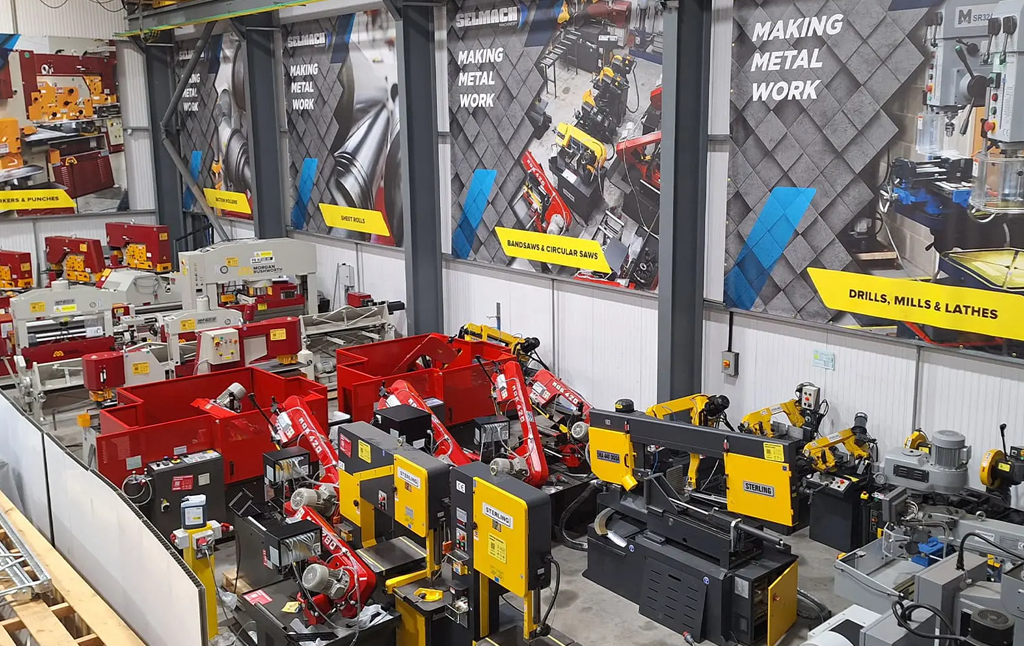
Selmach supplies CNC machinery for profiling and shaping, bending and folding and sawing and drilling. This guide helps you narrow the process before comparing individual models.
What CNC control does in a fabrication workshop
A CNC system follows programmed instructions to move the machine and control repeatable operations. The underlying process still matters. A fibre laser uses a focused beam to cut; a plasma machine uses a plasma arc; a turret punch creates features through tooling; a press brake forms a bend. Software and control do not turn one process into another.
Start with a list of representative parts. Record material, thickness, maximum size, profile shape, holes, bends, tolerance requirements, batch size and the finish needed after processing. Also mark which operations currently require handling between machines. The shortlisting questions below turn this into a useful buying brief.
For flat sheet and plate: laser, plasma, waterjet or punch?
A CNC fibre laser can be a strong choice for accurate metal profiles and repeatable sheet processing. Compare bed size, material mix, power, extraction, assist gas, loading arrangements and the cut quality your parts require. An automated machine only helps if upstream nesting and downstream part removal fit the planned production flow.
CNC plasma cutting may suit many plate and fabrication jobs, including applications where its capacity and cost profile align with the work. Waterjet cutting is worth considering for heat-sensitive materials or a mixed-material workload. Each has different requirements for consumables, utilities, maintenance and edge quality; there is no universally best method.
A CNC turret punch press can be particularly useful for repeated holes and formed sheet features. A laser may still be the better tool for complex outer contours. Selmach’s turret punch range page already explains how the processes can work together; review that page if this is your specific decision.
Selmach already has a detailed laser, plasma and waterjet comparison if your decision is specifically between those three cutting methods.
For tube, section and structural profiles
If most of your work starts as tube or section rather than flat sheet, a tube and section fibre laser or another dedicated profile machine may remove several separate cutting and preparation steps. Check profile type, maximum size, raw material length, finished part length and the handling system. Open sections, beams and small round tube do not call for the same machine configuration.
If the task is primarily repeat cut-to-length and hole-making in structural members, a CNC saw and drill line may be a more direct fit. Selmach’s existing tube and sheet hybrid workflow page and our saw and drill line article explore these choices.
For bending and forming
Cutting is only the first stage for many parts. A CNC press brake helps form sheet metal with programmed settings and backgauge positioning. A CNC box and pan folder can suit a different mix of panels, boxes and repeated folds. Compare part shape, bend length, material, tooling, operator access and the way the machine will integrate with profiling.
The best CNC investment may address the bottleneck after the laser rather than add capacity to an already fast cutting stage. Our batch size and automation article shows how to examine the full flow.
What to check before installing any CNC machine
Allow for more than the machine footprint. Material storage, loading, finished-part handling, extraction or coolant, power, gas where relevant, software and operator training can all affect the project. Ask how drawings become machine-ready programs and who will maintain the data. Our running-cost checklist shows how to compare these ongoing demands across processes. An unattended cycle is only reliable when material, programs and downstream capacity are ready for it.
Our CAD/CAM and training readiness checklist covers the people and processes around the equipment; the commissioning and acceptance checklist covers the handover. Selmach’s showroom demonstrations provide an opportunity to discuss representative parts with a machinery consultant.
Build a shortlist from real parts
Choose three representative components: your most common job, your most demanding job and the one you currently outsource or rework. For each, calculate the steps from raw material to finished part. The right process is the one that handles those steps at the quality and volume your business needs, within a workable budget and floor layout.
Browse our profiling and shaping machinery or contact Selmach with drawings, materials and volumes. We can help identify suitable processes before discussing individual machine specifications.
Published 30th September 2026