
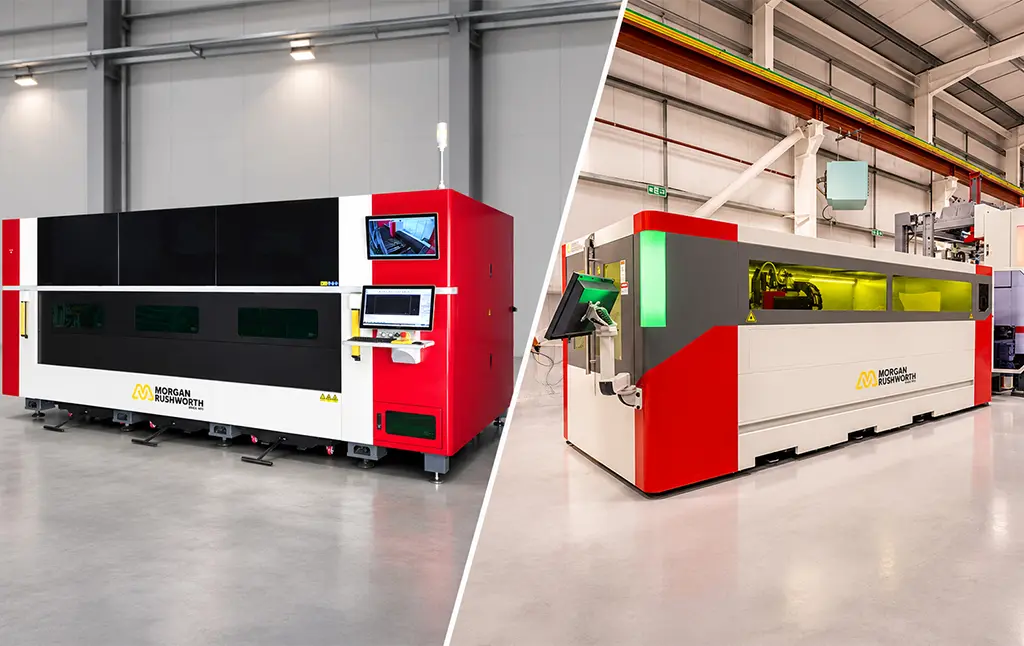
Choosing a compact fibre laser starts with two questions: how large are the parts you need to make, and how much working space can the complete installation use? A compact machine can mean a small cutting bed, but it can also mean a space-conscious layout that accepts a full 3,000 × 1,500 mm sheet.
Compare the stock format, loading arrangement and complete cost of each batch before choosing. A smaller bed can suit recurring small components; a full-sheet machine can remove stock preparation or support a different production mix. Neither format is automatically the cheaper route to an accepted part.
Separate the part envelope from the machine footprint
The part envelope is the usable area needed by the component, including lead-ins, spacing, clamps and any process margins. The machine footprint is the equipment outline. The working footprint also includes doors or table travel, services, stock storage, loading, collection and maintenance access.
Check the largest one-piece part in the drawing pack, not just the typical component. A part that only fits after splitting and welding needs that extra work in the comparison. Check grain direction, surface protection and orientation restrictions before assuming it can be rotated to fit.
Compare relevant Morgan Rushworth layouts
| Model option | Published format and arrangement | What to assess |
|---|---|---|
| XC 1309 | 1,330 × 950 mm processing area; static table | Small parts; purchased blanks or a separate stock-preparation route. |
| XE 3015 | 3,000 × 1,500 mm nominal sheet format; powered pull-out single table | Full-sheet access in a compact layout; allow space for the table in use. |
| XRM 3015 | 3,000 × 1,500 mm maximum sheet; moving cabin and single table | Full-sheet cutting with a different access and loading arrangement. |
| XR range / XS range | Shuttle-table production alternatives; select the quoted bed size | Repeated batches, overlapping preparation and any separately specified handling options. |
Use the individual product specifications and an approved layout for the exact machine being quoted. Nominal sheet format, axis travel and usable nesting area are different measurements. The model list gives comparison routes; it does not establish that every arrangement accepts the same automation package.
Price the stock preparation
If your supplier delivers larger sheets than the proposed bed accepts, establish who cuts them down. Include blank purchase premiums, shearing or sawing time, extra handling, offcuts and identification. Check whether pre-cut blanks remain flat and suitable for the laser.
Alternatively, compare supplied blanks in the intended grades and thicknesses. Smaller blanks may be convenient for short runs, but availability, minimum orders and delivery charges can change the economics. Keep remnant storage and traceability practical: material left over is only useful if it can be identified and used on another order.
Compare the same batch in both formats
Give each supplier the same drawings, quantities and acceptance requirements. Ask for a nest on each proposed stock format. Record sheets or blanks consumed, accepted parts produced, skeleton and scrap, handling events and total operator attendance.
A simple comparison is batch cost ÷ accepted parts. Batch cost should include net material cost after a realistic scrap credit, stock preparation, programming and setup, machine running costs, labour, finishing and rejects. Keep the treatment of capital and overhead consistent between options.
For illustration, a batch of 100 accepted parts costing £170 to prepare and process on smaller blanks costs £1.70 per part. If a full-sheet route produces the same accepted batch for £145, it costs £1.45 per part. That £25 batch difference still needs weighing against investment, floor space and annual demand. The numbers are hypothetical and do not predict either machine’s performance.
Test the loading rhythm
Count how often cutting must stop for unloading and loading. A single table may suit occasional work or long cutting cycles. A shuttle arrangement may create useful overlap when staff can clear one pallet while the other is cutting.
Observe what happens with delicate components, dense nests and mixed parts. Extra pallets or a tower do not automatically separate and label every finished part. Include the people and space needed to clear work and move it to bending or fabrication.
Choose the smallest workable production route
A small-bed machine deserves consideration when the recurring part envelope fits, prepared stock is economical and the required output is modest. A compact full-sheet machine deserves consideration when full sheets remove preparation or give useful flexibility within a constrained workshop. A production shuttle-table machine deserves consideration where repeat demand justifies the handling rhythm and investment.
Occasional oversized work can be costed as subcontracting rather than sizing the entire workshop around it. If it is regular, profitable work that needs one-piece cutting, assess a larger format with its handling and downstream requirements.
Compare options around your drawings
Use the filters in our fibre laser selector to compare bed size, power, automation and production requirement. Then send your largest part, a representative batch, usual stock sizes and a workshop plan to Selmach. Those details make it possible to discuss a machine that fits both the component and the way your workshop operates.
Published 11th November 2026