
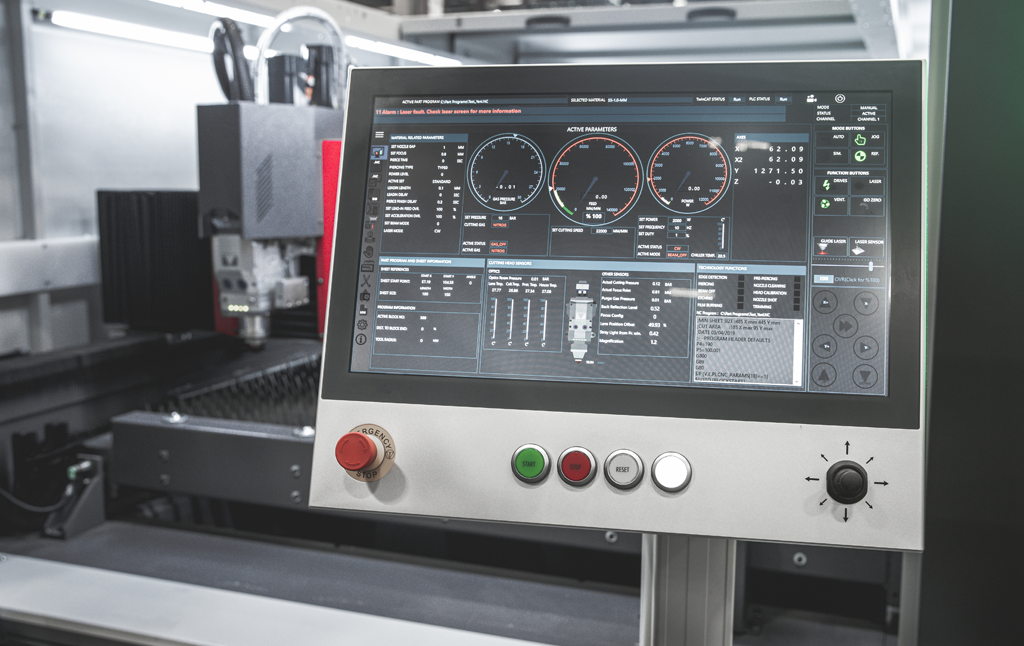
Automation is most valuable when it removes a real constraint. A fast CNC cycle can still leave a workshop waiting if sheets are not ready, parts cannot be removed or programs are unfinished. Before specifying automated handling, measure the whole path through production.
High mix, small batches
Where drawings change regularly, programming and setup can occupy a large share of the job. Fast changeover, clear controls and reliable data transfer may matter more than the shortest possible unattended cycle. Check how new programs are approved, where material information is stored and how operators recover from a stopped job.
Repeated or larger batches
When the same families of parts recur, material loading, nesting and finished-part removal may be the limiting stages. A CNC fibre laser with suitable handling options or another well-matched system can help maintain flow, but only if downstream processes can accept the output. Ask whether bending, deburring or welding will become the next queue.
On long stock, an automatic bandsaw or CNC saw and drill line presents a different handling challenge from a flat sheet machine. Material length, support and sorting should be considered alongside programmed cycle time.
Use a simple before-and-after measure
For three representative jobs, record programming time, setup time, machine time, operator attention, loading, unloading and rework. Compare the proposed process using the same steps. This exposes benefits that matter to your business and prevents an impressive machine speed from masking a slower total workflow.
Our CNC process selection guide covers the machine types. For the software and people around the machine, read our CAD/CAM and training checklist. Discuss your production mix with Selmach before choosing an automation package.
Published 30th September 2026