
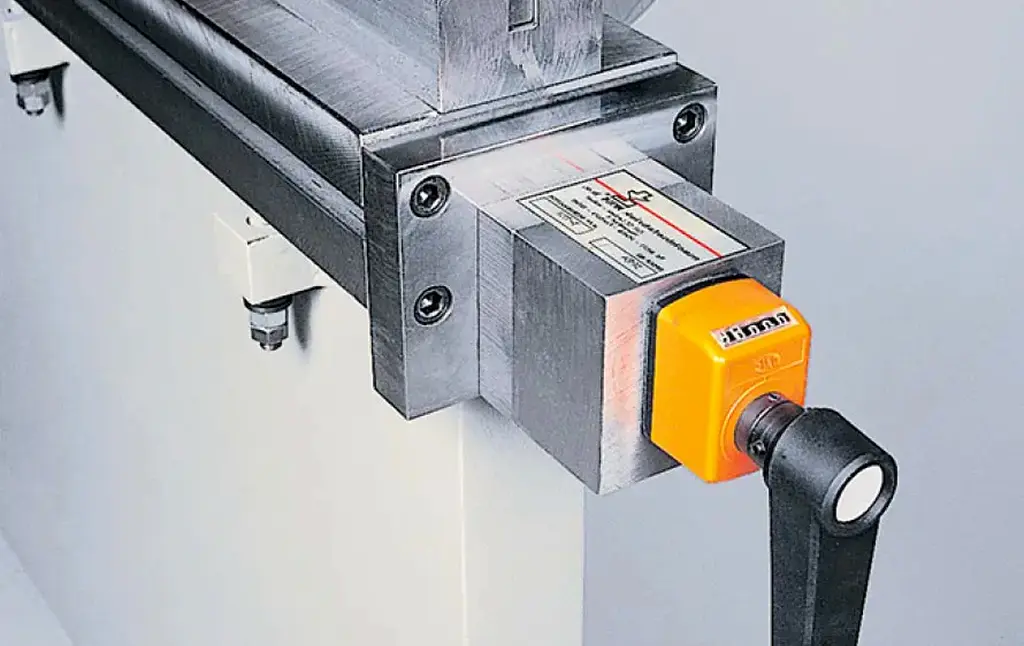
Long bends reveal differences that a short sample may hide. Under forming load, the machine and tooling deflect. Crowning compensates for this effect to help achieve a consistent bend angle along the component.
What crowning does
A compensation system changes the support or geometry along the bending line to offset deflection. Mechanical and hydraulic approaches exist, with manual or CNC-controlled adjustment depending on the machine. Ask how the proposed system is set, calibrated and recalled for repeat jobs.
Crowning does not correct every cause of angle variation. Material thickness and strength, tooling condition, alignment and setup still matter. It also does not correct an incorrectly gauged flange dimension.
CNC crowning and angle measurement
CNC crowning controls the compensation setting as part of the machine setup. Angle measurement assesses the formed angle through a particular sensing system, where fitted. Closed-loop correction may adjust the process using that measurement. These functions should be specified separately.
A machine with CNC crowning should not automatically be described as having automatic angle measurement. Likewise, an angle sensor’s capabilities and geometry restrictions need checking for the intended work.
Assess three- and four-metre components
Choose a representative long bend using the actual material and intended tools. Measure the angle at both ends and the centre; for critical work, agree additional positions. Record the compensation setting, first-off adjustments and results across the batch.
Then change jobs and recall the original setup. This tests whether the process is repeatable after a real changeover rather than only during a continuous demonstration. Compare accepted parts and adjustment time.
Specify the PBXS package
For Selmach’s premium Morgan Rushworth PBXS, optional mechanical and CNC motorised anti-deflection tables provide crowning compensation. Laser angle measurement is a separate option. Identify the crowning system in the quotation and distinguish included equipment from selected options. Confirm any angle-measurement package separately, including its compatibility with the material, tooling and component.
Provide the longest bend, expected force, required angles and tolerances. Selmach can assess the configuration alongside tooling, gauging and handling. For routine adjustment, use the procedure applicable to the machine and control; our existing manual crowning video is a separate resource and should not be assumed to describe every CNC configuration.
Keep the evidence useful
A claim of accurate long bends is strongest when accompanied by the material grade, thickness, length, tools, measurement positions and actual results. Those details allow a buyer to judge relevance to their own parts. Ask for a trial and documented acceptance criteria before purchase.
Published 21st October 2026