
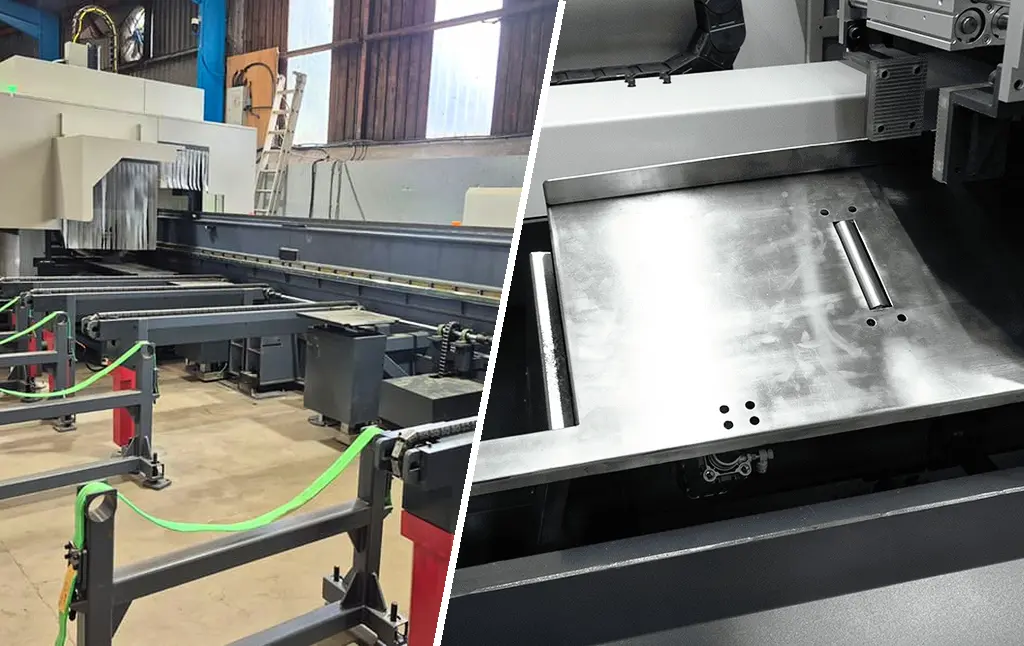
Tube laser automation is often discussed in terms of loading raw stock. The other end of the machine deserves equal attention: how finished components leave the cutting area and reach the next process.
A machine can cut suitable parts but still require frequent attention if its collection arrangement does not match the workload. This article focuses on discharge and finished-part handling, building on Selmach’s tube laser productivity guide.
Follow the part after separation
The unloading arrangement must receive the component at the point it separates from the stock. Depending on the equipment, this can involve supports, conveyors, collection trays or other handling systems.
The choice is specific to the machine configuration. Confirm which arrangement is included and which components it can handle. Automatic discharge does not necessarily mean automatic separation into individual customer orders.
Follow a sample part from the cutting area to its final collection position during a demonstration. This reveals the operator work remaining after the cut itself.
Long and short parts need different handling
Long components may need support to control movement and avoid damage during discharge. Their weight and stiffness affect handling as well as their length.
Short components need a suitable collection method too. Small rings, brackets or shaped sections can create a different challenge from long rail components. Include the shortest regular parts in your assessment.
Review finished-part limits separately from raw-stock loading limits. A machine’s ability to accept a long bar does not establish how it will unload every part that can be programmed from that bar.
Check surface protection
Consider what the component must look like when it reaches welding, finishing or assembly. Visible surfaces, delicate features and components with awkward centres of gravity deserve attention.
Ask how the arrangement supports and transfers those parts. Check representative components for marking, deformation and consistent placement after unloading.
Some work may need additional manual handling or a different collection arrangement. Understanding those exceptions before purchase helps the workshop plan labour and avoid unrealistic expectations of continuous operation.
Keep jobs separate
A collection area containing mixed components is not necessarily a sorted job. Agree how quantities, part identities and drawing revisions will be controlled after discharge.
Where equipment offers programmable destinations or sorting functions, verify their scope with actual parts. Where collection is shared, decide when containers will be changed and how their contents will be labelled.
For welding kits, a clear job reference and complete quantity check can be more useful than collecting components in the order they were cut. Collection should support the next operation.
Size collection capacity for the run
Ask how much finished work can accumulate before attention is needed. The answer depends on part length, shape, quantity and the selected arrangement.
A high-output programme producing short components may fill a container quickly. A run of long parts may need a different storage and removal route. Plan for both if they are part of your normal workload.
Include scrap and remnants. Establish where they go and how they are distinguished from useful finished components, using the equipment’s approved operating methods.
Link unloading to the layout
The collection area needs access for removal without repeatedly disrupting stock loading or other activity. Consider how parts travel to welding, bending or finishing.
For workshops processing tube and sheet, shared assembly areas can create competing movements. Selmach’s tube and sheet workflow guidance provides a starting point for planning those routes.
Check the arrangement with a realistic scenario: the machine is running, a completed batch needs collecting and another job is ready to start.
Test the complete unloading cycle
Use a sample set covering long parts, short parts, your heaviest regular components and demanding surface requirements. Record collection consistency, operator interventions and the time needed to clear finished work.
Selmach can help review the tube and section laser range against this sample set. Discuss unloading as part of the specification so the process from stock to usable components matches your workshop.
Published 13th October 2026