
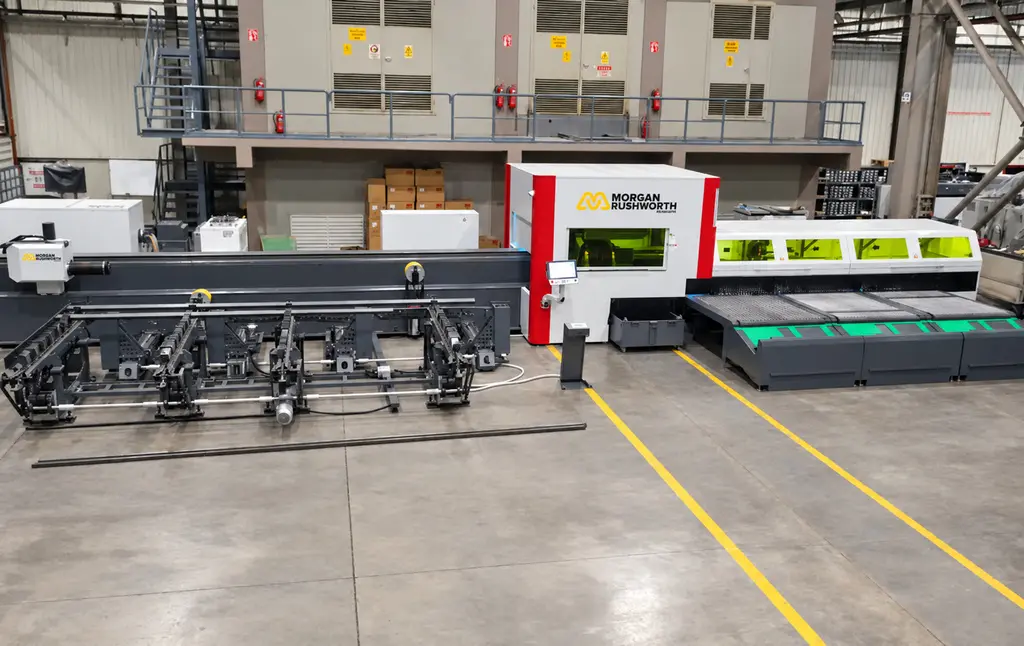
Tube laser capacity involves more than the diameter or size of section the machine can grip. Raw stock must enter the machine, travel through the cutting process and leave as supported finished components. Each stage can impose a different length limit.
For example, a machine configured to accept six-metre raw stock does not necessarily provide a six-metre finished-part discharge arrangement. Before comparing models, define both the material you buy and the components you need to produce.
Separate raw stock length from finished part length
Infeed capacity describes the raw material that can be introduced through a particular loading arrangement. Outfeed capacity describes the finished components that the receiving or discharge arrangement can accommodate. The exact definitions should be confirmed on the quotation.
A long tube producing many short brackets has a different handling requirement from the same tube producing one long structural component. Both may use similar raw stock but need different arrangements after cutting.
Give the supplier your shortest and longest stock lengths, together with your shortest and longest finished parts. Include a realistic range of repeat components rather than one maximum-size example.
Check minimum lengths as well as maximums
An automatic loader may require a minimum raw stock length for reliable separation, positioning and transfer. This limit can differ from the minimum stock length accepted through a permitted manual loading route.
Short finished parts introduce a separate question. Confirm how they are retained or discharged and whether the receiving arrangement suits their shape and weight. A small part’s ability to be cut does not establish that it will be collected in the way your process requires.
If you regularly reuse remnants, provide examples of their dimensions and lengths. Ask which can be processed on the proposed machine and which can use its automatic loading arrangement.
Allow for gripping and the remaining tail
Chucks need material to grip and control. The usable length of a stock item therefore depends on the machine arrangement, cutting sequence and permitted remnant strategy.
Do not calculate material yield by dividing raw length by component length alone. Include cut allowances, any end preparation and the residual material required by the selected configuration. Ask the supplier to demonstrate the nesting and remnant calculation for a representative job.
Where reduced-remnant features are available, verify their operating limits with your profile and component geometry. Avoid treating a general description of low waste as a guarantee for every programme.
Match support to the component
A long finished component needs appropriate support as it is separated and discharged. Weight, stiffness and shape affect the arrangement required, particularly where material can flex or an uneven section can move unexpectedly.
Supply profile dimensions, wall thickness and weight per metre alongside length. Round tube, rectangular hollow section and open profiles may require different considerations, and each should be checked against the quoted machine’s approved capabilities.
Consider the condition in which parts must arrive at the next operation. Components intended for welding or assembly may need controlled collection to protect surfaces and keep job batches identifiable.
Draw the full workshop material route
Plan from stock delivery to the next manufacturing stage. Include storage racks, loading access, the machine enclosure, receiving area, collection equipment and maintenance access.
The installed machine dimensions alone do not show the space needed to manoeuvre long stock. A configuration that fits between two columns may still be difficult to replenish or empty during normal production.
Mark the direction of travel and the handling method on a workshop drawing. Check doors, building obstructions and shared routes. Ask the supplier for the installation layout relevant to the exact loading and discharge options quoted.
Test several jobs before choosing
Use at least three representative examples: a repeat short-component job, a long finished component and a job using an awkward stock size or remnant. Review loading, support, cutting sequence and collection for each.
Record how much operator attendance is needed. Long outfeed capacity may be valuable, but so is a practical receiving arrangement that lets staff collect parts without constantly interrupting production.
Our guide to choosing a tube or section laser covers the broader selection process. The benefits of a compact tube laser are also relevant where workshop space shapes the decision.
Specify the complete configuration
Send Selmach your stock lengths, finished-part drawings and workshop layout. We can review the tube and section laser range against the complete material route, helping you choose infeed and outfeed arrangements that suit the work you need to produce.
Published 6th October 2026