
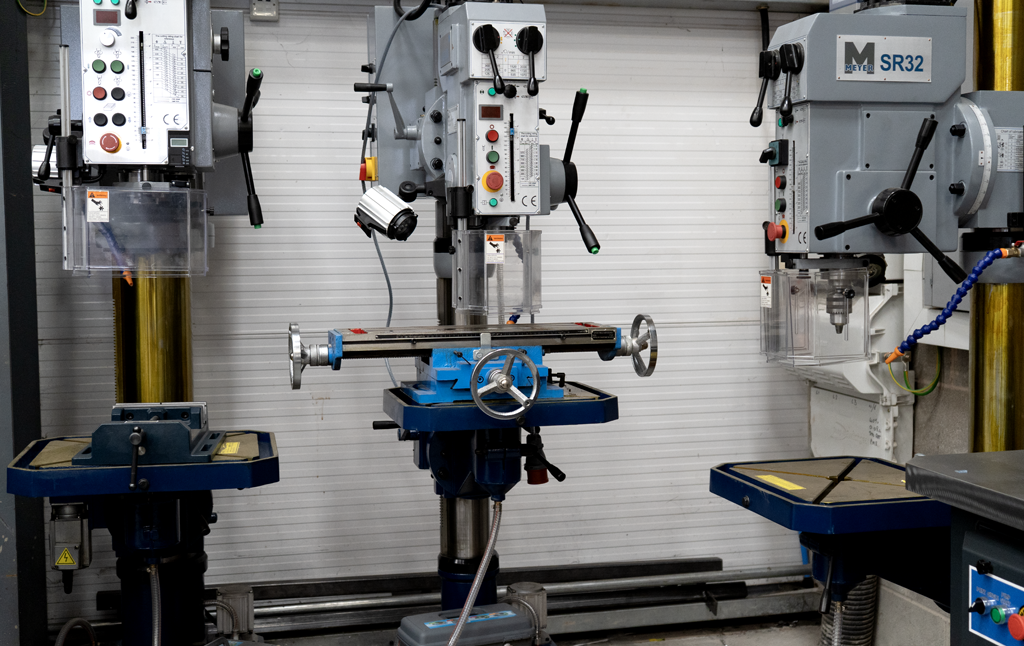
Selmach’s Meyer pillar drill range includes belt-driven SL and geared-head SR machines. The aim is not to buy the largest specification on the page; it is to choose the machine that can handle your normal work and the demanding jobs you expect it to take on.
First, gather six facts about your work
- Hole sizes and materials. Record the common holes as well as the maximum. Include the material and thickness rather than quoting a diameter in isolation.
- Hole positions. Measure the furthest hole from a workpiece edge to establish the required throat depth.
- Part size and weight. Note the space needed for a vice, clamps and any additional support.
- Tapping requirement. Record thread sizes, depth and how often tapping is performed.
- Is the job occasional, repeated in batches or continuous across a shift?
- Workshop constraints. Confirm power supply, access, floor space and the way the part will be brought to the machine.
Use the range to narrow the choice
The current Meyer range page lists the SL32 and SL32A belt-driven machines and the geared-head SR models, including the SR25, SR32 and SR32AE. Selmach’s older Meyer range introduction describes several machines; use this checklist for the part-specific buying decision and the current product pages for up-to-date specifications. Published drilling and tapping figures let you screen out machines that are clearly too small, but check table dimensions, spindle travel and the functions on the exact model.
For example, an operator who needs powered feed and regular tapping should look closely at the SR32AE and other models offering those features. A workshop primarily making varied holes in smaller parts might have a different shortlist. The belt-driven versus geared-head comparison helps with the drive decision.
Test the shortlist against a real part
Mark the largest workpiece on a drawing and circle the hole that is hardest to reach. Add the tool and fixture you intend to use. This catches access problems before they become an expensive surprise. Where possible, compare the controls and handling in a demonstration, particularly if several operators will share the machine.
Our full pillar drill buyer’s guide explains each measurement. Send the checklist to Selmach with a part drawing or a description of the job, and we can help you identify a suitable model.
Published 30th September 2026