
A manual press and a powered hydraulic press can both be useful in a workshop. The decision depends on what happens between the first and last part of a job: how often the press is used, how the component is loaded and how much control the operator needs.
Occasional jobs and simple setups
For maintenance, assembly or low-volume work, manual operation may provide the control and flexibility the workshop needs without specifying a powered machine for a small number of cycles. The Morgan Rushworth DP manual H-frame press is one example in Selmach’s range. The decision still depends on the force rating, usable work area and the part itself.
Do not assume that a small number of jobs means the part is small. A bulky fabrication can be difficult to load even when the pressing operation is brief. Consider the entire setup and the way the work is supported.
Repeated work and production flow
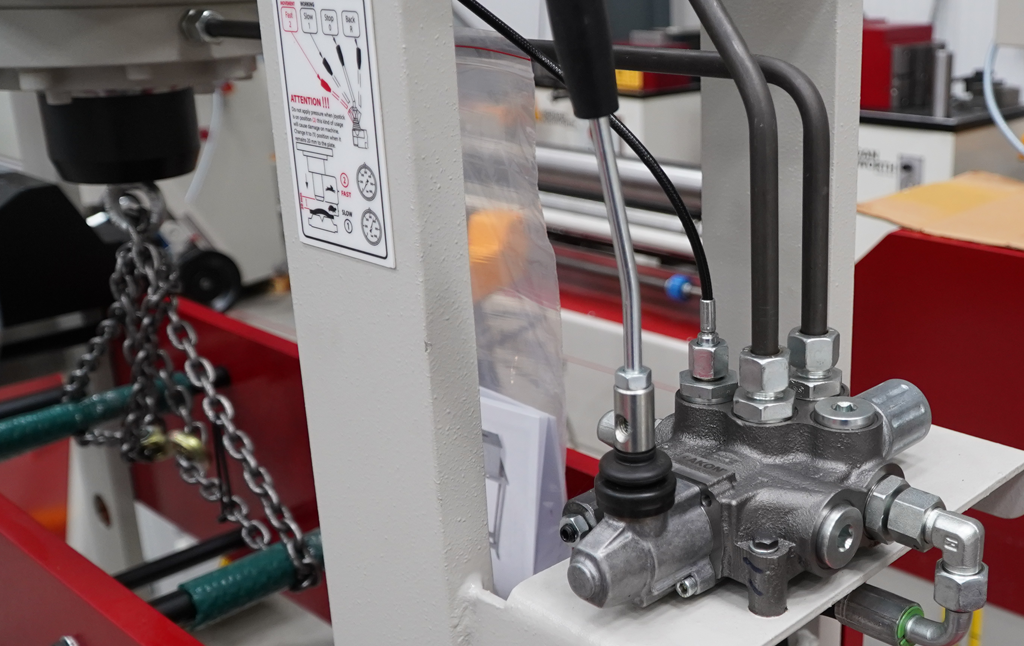
Powered operation becomes more relevant when operators press many components, need consistent cycles or move between different jobs through the day. Assess how the ram is controlled, how quickly the part can be positioned and removed, and what the complete cycle looks like. The Morgan Rushworth HFP hydraulic press is one of the powered options to compare.
The machine alone may not remove the bottleneck. If loading takes several minutes while pressing takes seconds, improving workholding and material handling may matter just as much as changing the hydraulic drive.
Five questions for the shortlist
How many cycles are performed per shift? Does the part need to be pressed at several positions? What travel does the ram require? How is the part held and removed? Are operators doing one-off repairs or a repeatable production task? Put answers to those questions beside the required force and working area.
Our H-frame press buyer’s guide covers those dimensions. You can also review the full press range and ask Selmach to compare a manual and powered setup for your actual components.
Published 30th September 2026