
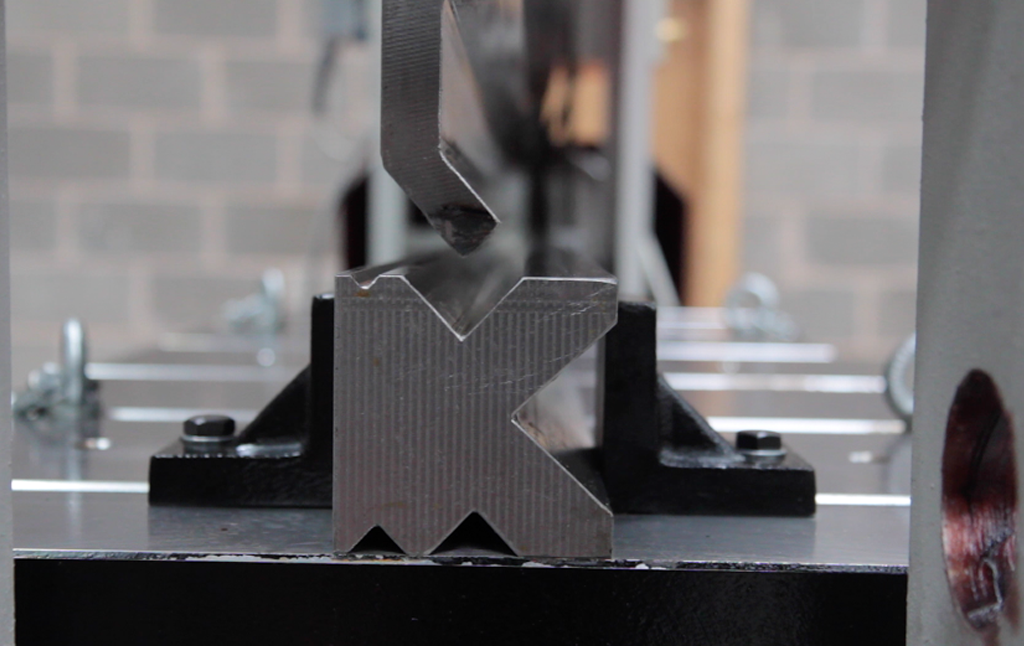
A hydraulic press does not work alone. The fixture beneath the part, the contact surface on the ram and the way the load passes through the component all affect whether an operation is practical. It is worth planning these details before you choose a machine.
Pressing a component into an assembly
A bush or bearing needs support around the receiving component and a suitable pressing tool that contacts the correct surface. The tooling must be appropriately rated and aligned with the operation. A component that looks level before force is applied can move if the support is unstable or the contact point is wrong. Follow the component maker’s method and the machine instructions.
Straightening and forming
Straightening a section calls for support at the correct points and controlled application of force. Forming a shape may require dedicated upper and lower tooling. In both cases, the job should be specified from the actual material, geometry and intended result, rather than from the press tonnage alone. Avoid promising a bend or tolerance without a trial or a verified tooling specification.
Allow space for the fixture
A fixture consumes daylight and bed area. When comparing machines, measure the workpiece with its tools, V-blocks, supports and loading clearance. Check ram stroke and the part’s position between the uprights. Our press tonnage and working-area guide sets out the dimensions.
If your workshop performs several distinct tasks, list each setup. You may find that a versatile Morgan Rushworth H-frame press can handle them with suitable tooling, or that one operation is better suited to a different machine.
The full H-frame buyer’s guide covers that choice. Send Selmach drawings or photographs of the work and any existing tools, and we can discuss how the intended setup fits a shortlisted press.
Published 30th September 2026