
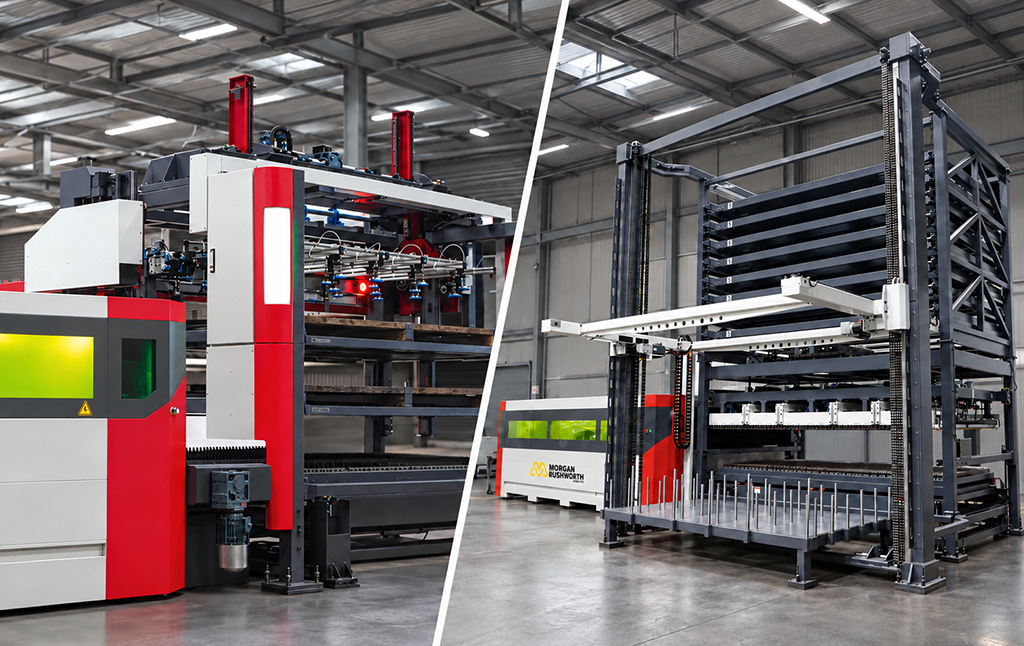
Choosing between a compact tower and a full tower starts with the material you need available at the laser. Both can support automated handling, but they support different practical requirements around stock storage and preparation for completed work.
A compact arrangement can suit a prepared batch with a straightforward material supply. A full tower may provide additional storage positions for a more varied schedule. The exact functions depend on the quoted configuration, so the names alone are not enough to make the comparison.
Establish your material schedule
Review several typical weeks of work. List sheet sizes, grades and thicknesses, then identify how often the operator changes between them. Separate occasional requirements from materials that must be ready every day.
A workshop cutting a long batch from one prepared stack may gain little from storing many different materials beside the machine. A subcontractor changing grades repeatedly could benefit more from several accessible stock positions, provided the system can select them as required.
Also consider how stock will be replenished. A tower needs a practical loading route and sufficient capacity for the jobs you plan to run. It does not remove the need to manage material identification and inventory.
Understand the compact arrangement
A compact system is intended to provide automated handling within a relatively concentrated layout. Assess the space occupied by the complete installation rather than comparing only the tower structure alone.
The Morgan Rushworth Compact Tower System provides a relevant option for suitable laser configurations. Confirm how raw stock and cut nests are accommodated, which sheet formats can be handled and how a material change is made.
It may be a sensible choice where the main constraint is repeated loading and unloading rather than access to a large material library. A demonstration should include normal replenishment and clearance tasks.
Assess the extra storage of a full tower
The Morgan Rushworth Fibre Laser Tower System offers another approach to automated material handling. Establish how each storage position will be used and which movements are controlled automatically on the configuration being quoted.
Additional positions may support a broader material schedule or a longer prepared run. Their value depends on accessibility, permitted loads and the way the controls manage jobs. Storage capacity that cannot feed the desired material sequence will not deliver the same benefit as selectable stock access.
Ask what happens when a material position empties or a collection position fills. These events define how long the system can operate before intervention is required.
Compare the complete installation
Ask both suppliers the same practical questions. Which sheet sizes, thicknesses and weights can be handled? How many stock and collection positions are supplied? Can the requested materials be selected automatically in the intended sequence? Where are finished components and scrap separated?
Also establish how manual jobs or unsuitable remnants are handled. A production schedule rarely consists entirely of ideal automation jobs. Confirm the permitted route for work outside the automatic handling range and what changeover involves.
These questions expose practical differences that a simple tower-height comparison can miss. Confirm compatibility with the precise laser model, bed size and controls included in the quotation.
Check building height and access
Vertical storage uses workshop height, but the installation still needs space around it. Check overhead beams, cranes, lighting and other services against the supplier’s layout. Confirm floor requirements and how equipment will reach its final position.
Leave workable routes for stock deliveries and finished parts. A tower placed beside the laser can reduce travel, but it can also obstruct an existing route if the layout is considered too late.
Do not assume a compact design means no additional operational space. The footprint drawing must account for normal use and servicing, not simply the outline of the equipment.
Match the investment to work you can sell
A larger system may provide useful capacity for growth, but that capacity needs realistic demand. Compare both arrangements using the same job mix and include time spent refilling and clearing them.
If the compact option handles the regular schedule comfortably, additional storage needs a separate justification. If material changes interrupt production throughout the day, a more extensive arrangement may address a measurable problem.
Explore the Selmach fibre laser range and share your material schedule and workshop layout with our team. We can help compare tower configurations and your production requirements.
Published 6th October 2026