
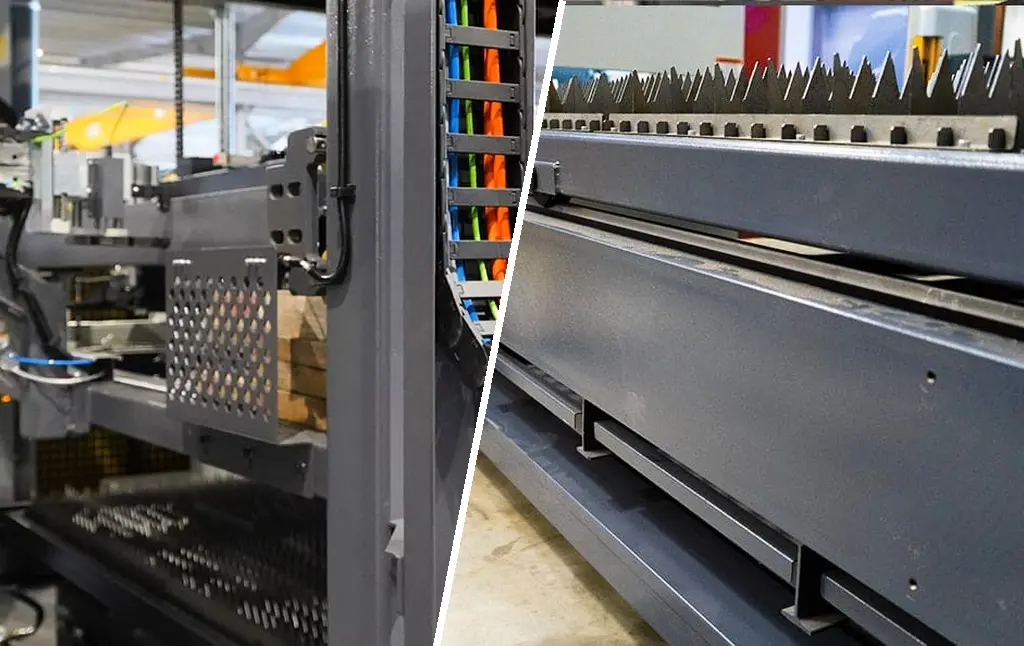
Adding automation to an existing fibre laser may be possible, but compatibility needs to be assessed for the specific machine and proposed handling equipment. A system designed for one configuration should not be assumed to work with another.
The first step is to define the task you want to automate. Sheet loading, cut-nest unloading, tower storage and individual part sorting are separate functions with different equipment and integration requirements.
Identify the machine configuration
Collect the machine model, serial number, year, control details and any existing handling options. Include installation drawings and records of modifications where available.
The supplier needs this information to assess mechanical and control compatibility. Similar-looking machines can have different interfaces, table arrangements or software versions.
Ask for written confirmation of the supported configuration. A statement that automation can be supplied for a machine range is not confirmation that it can be retrofitted to every installed machine in that range.
Match investment to the actual delay
Measure where operator time and production interruptions occur. If the main delay is loading raw sheets, the requirement differs from a workshop spending hours separating and identifying cut components.
If finished parts wait for bending, extra loading capacity may increase the queue without improving completed output. Review the route beyond cutting before selecting equipment.
Selmach’s automation solutions offer a starting point for discussing these different handling stages and the intended production result.
Review mechanical and control integration
The assessment should cover how material reaches the cutting table, how completed work leaves it and how the machine and automation exchange operating signals.
Software and programming requirements matter too. Confirm what information the system needs, whether existing software can provide it and what changes or training would be necessary.
The supplier should assess guarding, access and the integrated operating sequence. Treat the retrofit as a complete equipment project with a defined commissioning scope, rather than a stand-alone accessory purchase.
Check space and services
An existing laser may be positioned for manual loading but leave insufficient room for a handling system. Review the full layout, including movement envelopes, stock access, finished-work collection and maintenance areas.
Tower arrangements can add height requirements. Loading and unloading equipment can change routes used by forklifts, trolleys and operators. Confirm these details against drawings for the proposed configuration.
Check service requirements as part of the assessment. The project may require changes to electrical connections, extraction arrangements or other installations, depending on the equipment selected.
Include the condition of the laser
Automation works best when the underlying cutting process is consistent. Recurring faults, unreliable programmes or unresolved cut-quality problems should be understood before extending the production cycle.
Review maintenance history and the supplier’s assessment. Ask whether worn components or pending service work should be addressed as part of the project.
This is also an opportunity to review operator and programming training. Selmach’s CAD and CAM checklist can help identify requirements affecting the complete process.
Compare retrofit and replacement fairly
A retrofit quotation should include the complete supported scope: equipment, integration, installation preparation, software, commissioning and training. Include expected production interruption in your planning.
Compare that with a new integrated installation using the same workload. Retaining a machine may be sensible; replacing it may offer a better fit if compatibility is limited or several upgrades are required.
Avoid basing the decision only on the accessory price. Compare the cost of achieving the required capability and the ongoing work needed to operate it.
Agree an acceptance trial
Define the jobs and operating scenarios that will demonstrate the result before ordering. Include representative materials, normal job changes, finished-work collection and agreed recovery procedures for interruptions.
Ask what documentation, training and support will be provided after commissioning. Confirm responsibilities for the existing laser and added equipment so future service requests have a clear route.
Contact Selmach with machine details, your layout and sample workload. We can help assess whether a supported retrofit is available or whether another fibre laser configuration better suits the capacity you need.
Published 13th October 2026