
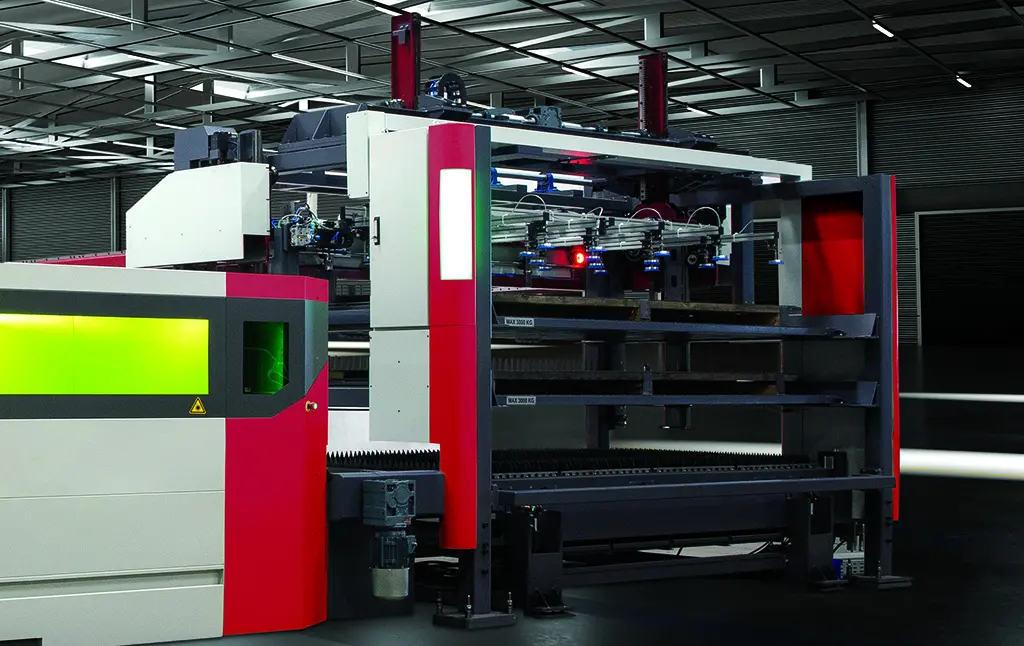
A fibre laser stacking system can make production less dependent on an operator returning to the machine after every nest. By organising the loading of raw material and collection of cut nests, it helps the laser continue through a prepared batch with fewer handling interruptions.
The benefit is easiest to assess when you know where your current process loses time between sheets. A stacker does not change the geometry of the components or remove every workshop task. Its value comes from making material handling more consistent and allowing people to use their time elsewhere.
Reduce the gaps between cutting jobs
Manual loading involves more than lifting a sheet. The operator may need to collect stock, clear the previous nest, reposition lifting equipment and return after completing another task. Those delays can vary considerably across a shift.
Automated handling makes the sequence more predictable. Where the machine and arrangement permit overlap, part of the material preparation can take place during cutting. The precise gain depends on the handling cycle, cutting time and how the system exchanges material.
Measure the sheet’s path rather than judge the investment solely from a loading-cycle specification. Very short cutting jobs can expose handling limits more quickly than long nests.
Make operator time available elsewhere
Repeated sheet movements can tie up an experienced operator for work that does not require their full skill. A suitable stacking system can reduce those movements and let them prepare subsequent jobs, inspect components or operate other equipment within an agreed working arrangement.
This is a capacity benefit even when the wage bill stays the same. If the same team completes more accepted work during normal hours, the business may avoid overtime or accommodate additional orders. The distinction should be clear in any cost calculation: released time is not automatically a cash saving.
Operators still need to prepare material, maintain the machine, monitor production and deal with completed parts. Assess the remaining tasks before planning how their time will be shared.
Improve the organisation of sheet handling
A defined loading and collection arrangement gives raw material and cut nests a consistent place. That can reduce temporary stacks around the machine and simplify preparation for the next batch change.
Surface quality also deserves attention. Suitable handling equipment may reduce repeated manual contact with finished or coated material, but the outcome depends on clean contact points and the actual sheet surface. Trial appearance-critical materials before committing to a handling method.
Check stack weights and collection capacity as well as sheet capacity. A system able to handle an individual sheet still needs sufficient space for the material and completed nests in your planned run.
A practical example from MSB Group
In our MSB Group case study, the customer describes using a Morgan Rushworth XR fibre laser with a Compact Stacker to run a prepared sheet programme while the operator monitors or works on other equipment.
It is useful evidence of the benefit in practice: the handling arrangement changed how the operator could divide their working time. It is not a guaranteed result for every workshop. Your job lengths, material mix and remaining manual operations will determine what is achievable.
When reviewing that example, consider whether your regular work can be prepared as a similar batch or whether frequent material changes require a different storage arrangement.
Recognise the work left to the workshop
Unloading a cut nest is different from sorting individual components. Unless the specified system includes finished-part sorting, somebody must still separate, identify and move parts to the next process.
A stacker also cannot compensate for unreliable cutting or poorly prepared stock. If sheets regularly lift, parts tip or programmes need repeated intervention, investigate those issues before extending the planned run. Maintained slats and suitable nesting remain part of a dependable process.
The strongest benefit appears when loading, cutting and downstream capacity are considered together. A machine that cuts continuously into an overloaded collection area will eventually have to stop.
Check whether stacking suits your production
Compare your current and proposed arrangements using a normal batch. Include replenishing material, handling finished nests and recording accepted components rather than only completed cutting cycles.
The Morgan Rushworth Compact Tower System is one option to explore alongside our fibre laser range. Send Selmach your drawings, material details and current handling times so we can discuss whether a stacking system would address the delays in your workshop.
Published 6th October 2026