
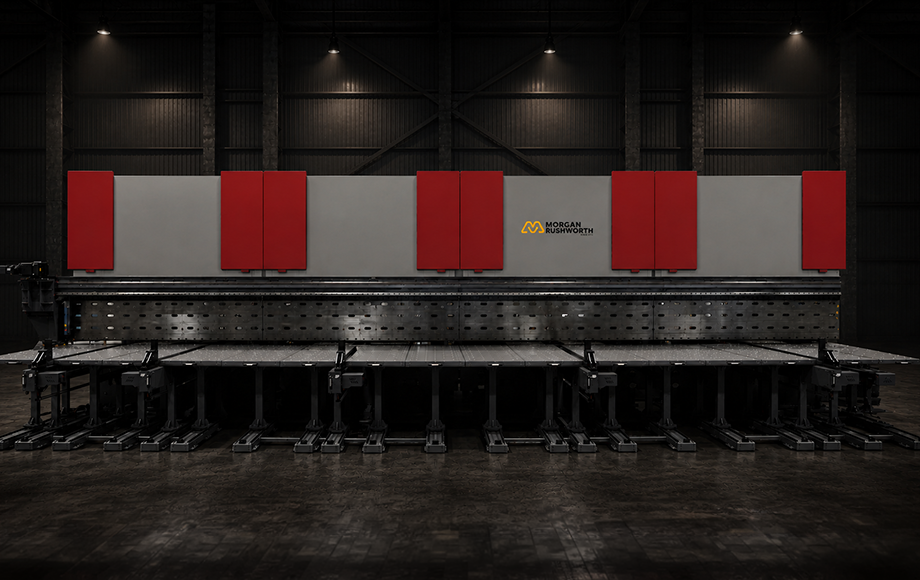
For most sheet metal applications, a single press brake provides all the bending capacity a manufacturer needs. However, some projects involve exceptionally long components, heavier materials or production requirements that cannot be accommodated by a conventional standalone machine.
That is where a bespoke multi-machine press brake system can provide the answer.
Here at Selmach, we can supply specialist Morgan Rushworth press brake configurations designed around the individual requirements of your business. These can include Tandem systems featuring two connected press brakes, Tridem arrangements using three machines, or even Quadrem configurations combining four press brakes into one synchronised bending solution.
Whether you need to produce extremely long components, increase your available bending force or introduce greater flexibility into your production process, our team can help create a solution that works around you.
What Is a Tandem Press Brake?
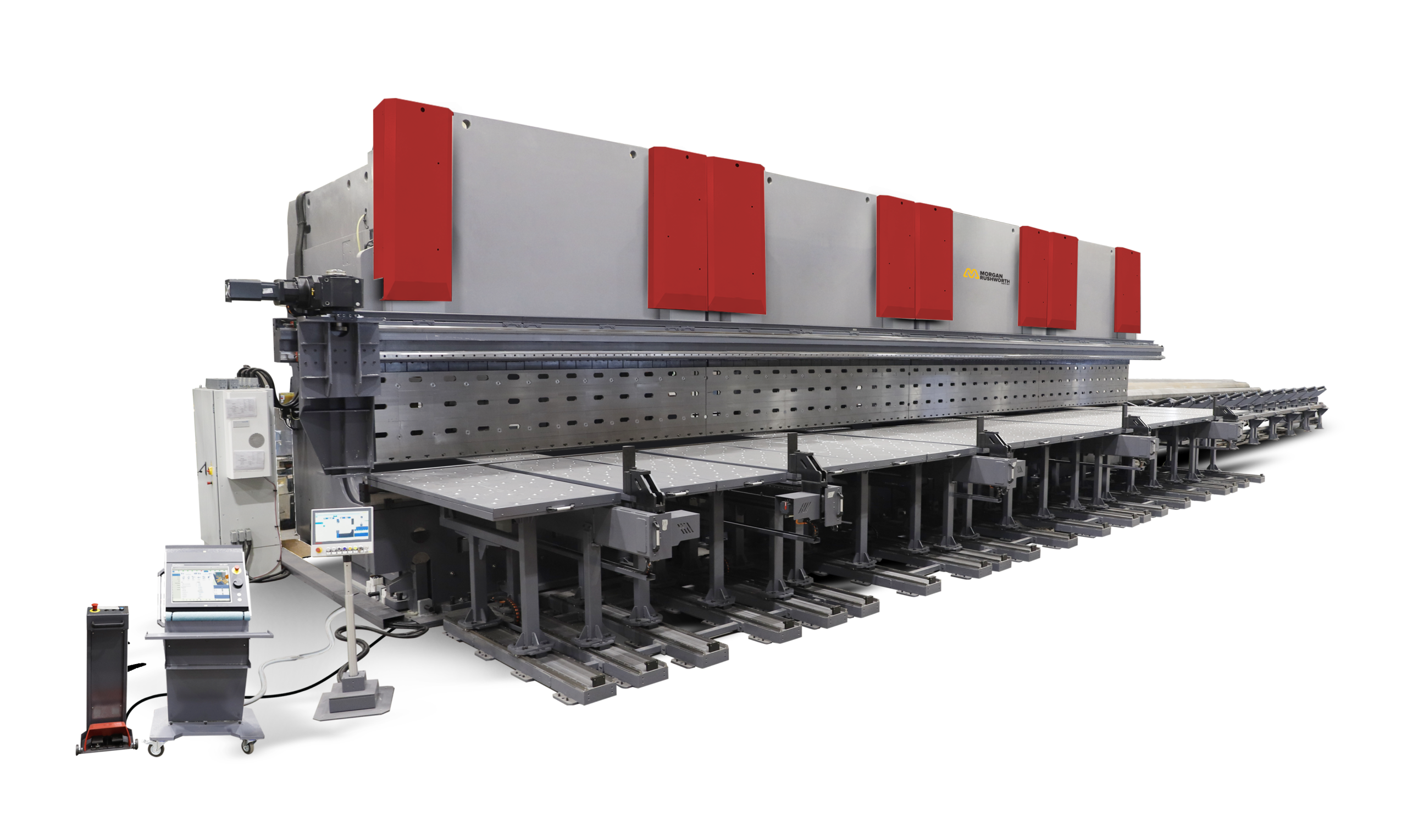
A Tandem press brake system consists of two individual press brakes installed in line and configured to work together. When operated in synchronised mode, the machines function as one extended press brake, allowing significantly longer components to be bent accurately across both machines.
Depending on the application, a Tandem system could combine two machines of equal length and tonnage or be designed around more specific production requirements.
For manufacturers requiring even greater working lengths, the same principle can be extended further. A Tridem configuration uses three connected press brakes, while a Quadrem system uses four machines to create an exceptionally long and powerful bending line.
These systems are engineered to maintain accurate control across the complete working length, allowing the individual machines to move together during the bending cycle.
Bend Components of Extreme Lengths
The most obvious advantage of a multi-machine press brake system is its ability to bend exceptionally long components.
Applications such as structural sections, architectural panels, lighting columns, vehicle components, agricultural equipment and specialist fabrications can involve parts that extend far beyond the capacity of a standard press brake.
By synchronising multiple Morgan Rushworth press brakes, manufacturers can create the working length required for these demanding applications without relying on a single oversized machine.
This provides a practical route into long-component fabrication while maintaining the control, repeatability and accuracy expected from a modern CNC press brake.
Use the Machines Together or Independently
One of the most valuable benefits of a Tandem, Tridem or Quadrem installation is the flexibility it can bring to everyday production.
When a long component needs to be formed, the machines can be operated together in synchronised mode. However, when the full working length is not required, each press brake can also be used independently to produce smaller parts.
For example, a Tandem system could be used as one long press brake for a large fabrication and then separated into two individual production stations for standard bending work.
This can help prevent a large-capacity bending system from sitting idle between specialist projects. Instead, each machine can continue to contribute to day-to-day production, increasing utilisation across the workshop.
A Tridem or Quadrem installation offers even more possibilities. Depending on the system design and production schedule, different machines may be used individually or in suitable combinations, allowing work to be distributed more effectively across the available capacity.
Increased Production Flexibility
Production requirements rarely remain the same from one job to the next. A business may need to bend small brackets and enclosures one day, followed by long structural components the next.
A multi-machine press brake system provides the versatility to handle both.
The ability to move between independent and synchronised operation allows manufacturers to react to changing workloads without committing the entire system to one type of component. Smaller work can be completed on individual machines while the full installation remains available for specialist long-length projects.
This flexibility can be particularly valuable for subcontract fabricators, where component sizes, materials and production volumes can vary considerably between customers.
Greater Combined Bending Capacity
Connecting multiple press brakes can also provide the combined force required for large or demanding components.
The precise tonnage needed will depend on several factors, including the material type, material thickness, bending length, tooling and required bend radius. By designing the system around the intended application, we can help ensure that the available bending force is appropriate across the complete working length.
This can provide a more tailored solution than selecting a standard machine and attempting to adapt production around its limitations.
Efficient Use of Workshop Capacity
A very large standalone press brake may be ideal for one specialist component but less efficient when producing shorter parts. It also represents a single production station, meaning only one job can normally be completed on the machine at a time.
With a multi-machine configuration, the available equipment can be used more dynamically.
When operating independently, multiple components may be processed across separate machines. When a large project arrives, the system can be brought together to deliver the required working length and capacity.
This combination of specialist capability and everyday usability can help businesses make more effective use of their machinery investment.
A Solution Designed Around Your Application
A specialist press brake installation should always begin with the component rather than the machine.
Our team will work with you to understand the parts you need to produce, including:
- Maximum and minimum bending lengths
- Material types and thicknesses
- Required bending forces
- Component weights and handling requirements
- Production volumes
- Tooling requirements
- Available workshop space
- Individual and synchronised operating needs
Additional equipment may also form an important part of the complete solution. This could include specialist tooling, sheet supports, front or rear material handling systems, safety equipment and other production aids designed to make long or heavy components easier to control.
By considering the complete manufacturing process, we can help develop a press brake system that is practical, productive and suited to the way your business operates.
Morgan Rushworth Press Brakes from Selmach
Morgan Rushworth press brakes are available in a wide range of bending lengths, tonnages and control specifications, providing the foundation for highly specialised bending installations.
From a standalone machine for general fabrication through to Tandem, Tridem and Quadrem configurations for extreme working lengths, our focus is on supplying equipment that meets the real production needs of the customer.
Every bespoke project presents its own challenges. Component dimensions, material characteristics, floor space, handling and production flow must all be considered before the most suitable arrangement can be identified.
With experience supplying machinery to manufacturers throughout the UK, Selmach can support your project from the initial discussion and machine specification through to installation, commissioning, training and ongoing service support.
Discuss Your Bespoke Press Brake Project
Whether you are looking to increase your bending length, add greater flexibility to your workshop or develop a complete production system for a specialist component, Selmach can help.
Our team can discuss your application, review your requirements and develop a bespoke Morgan Rushworth press brake solution built around the work you need to produce.
Contact Selmach today to discuss Tandem, Tridem, Quadrem or other specialist press brake configurations.
Published 17th July 2026