
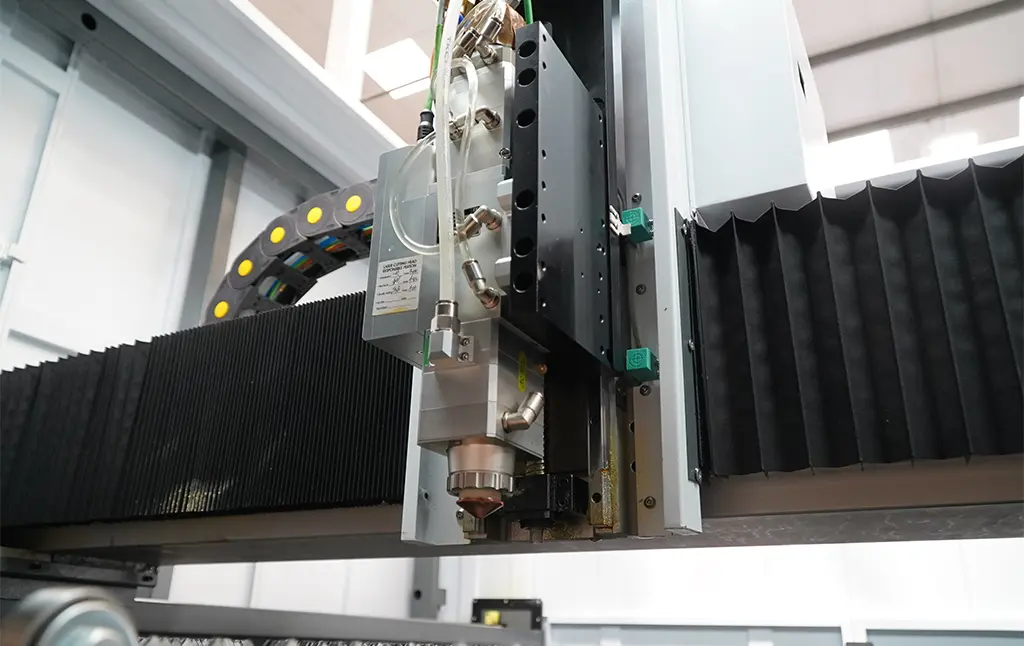
From OEM manufacturers and subcontract fabricators through to shipbuilders and general engineering firms, sheet metal cutting is a fundamental part of modern manufacturing. While very simple components can sometimes be produced using a guillotine, the majority of real-world parts demand far greater accuracy, repeatability and flexibility. That usually means CNC laser or plasma cutting.
For many businesses, the default solution is to use a specialist external laser cutting service. It is familiar, it avoids capital expenditure, and it offers access to experienced operators and industrial equipment.
But is outsourcing always the right long-term decision?
At a certain point, regularly paying for subcontract laser cutting becomes more expensive, slower and less flexible than bringing the process in-house. Understanding where that tipping point lies is key.
A Simple Rule of Thumb
If you are spending more than £1,500 per month on outsourced laser cutting, it is time to seriously consider bringing laser cutting in-house.
That figure represents the point at which recurring subcontract costs often outweigh the ownership costs of a modern CNC laser cutting machine. Once you factor in lead times, transport, material mark-ups and reduced flexibility, the business case becomes increasingly clear.
That said, the decision is not purely financial. It also affects how you plan production, respond to customers and control quality.
Outsourcing vs Buying Your Own Machine
Choosing between outsourcing and purchasing a CNC cutting machine can feel overwhelming. Both options have clear advantages and disadvantages, depending on your production volume, material range and growth plans.
External Laser Cutting Services
Advantages
-
No initial capital outlay
-
Access to specialist cutting expertise
-
Capacity to handle bulk or irregular orders
-
No responsibility for maintenance or operator training
-
Access to multiple cutting technologies and secondary operations under one roof
Disadvantages
-
Higher material prices compared to direct sourcing
-
Transportation and handling costs
-
Reduced flexibility and potential delays
-
You work to the supplier’s schedule, not your own
In-House CNC Cutting Machines
Advantages
-
Machine typically pays for itself within 2 to 5 years
-
Full control over quality and scheduling
-
Dedicated machine availability
-
Costs can be classed as capital investment
-
Freedom to choose materials and suppliers
Disadvantages
-
Initial investment required
-
Learning curve for operators
-
Space and infrastructure requirements
To make the decision clearer, it helps to understand exactly what external laser cutting services offer and where their limitations lie.
What Do Custom Laser Cutting Services Provide?
A custom laser cutting service is an external company that specialises in cutting sheet metal or tube to order. These businesses typically process materials such as mild steel, stainless steel, aluminium and other ferrous and non-ferrous metals.
Common applications include flat blanks, brackets, panels, stencils, signage, prototypes and, in some cases, fully formed or partially fabricated components.
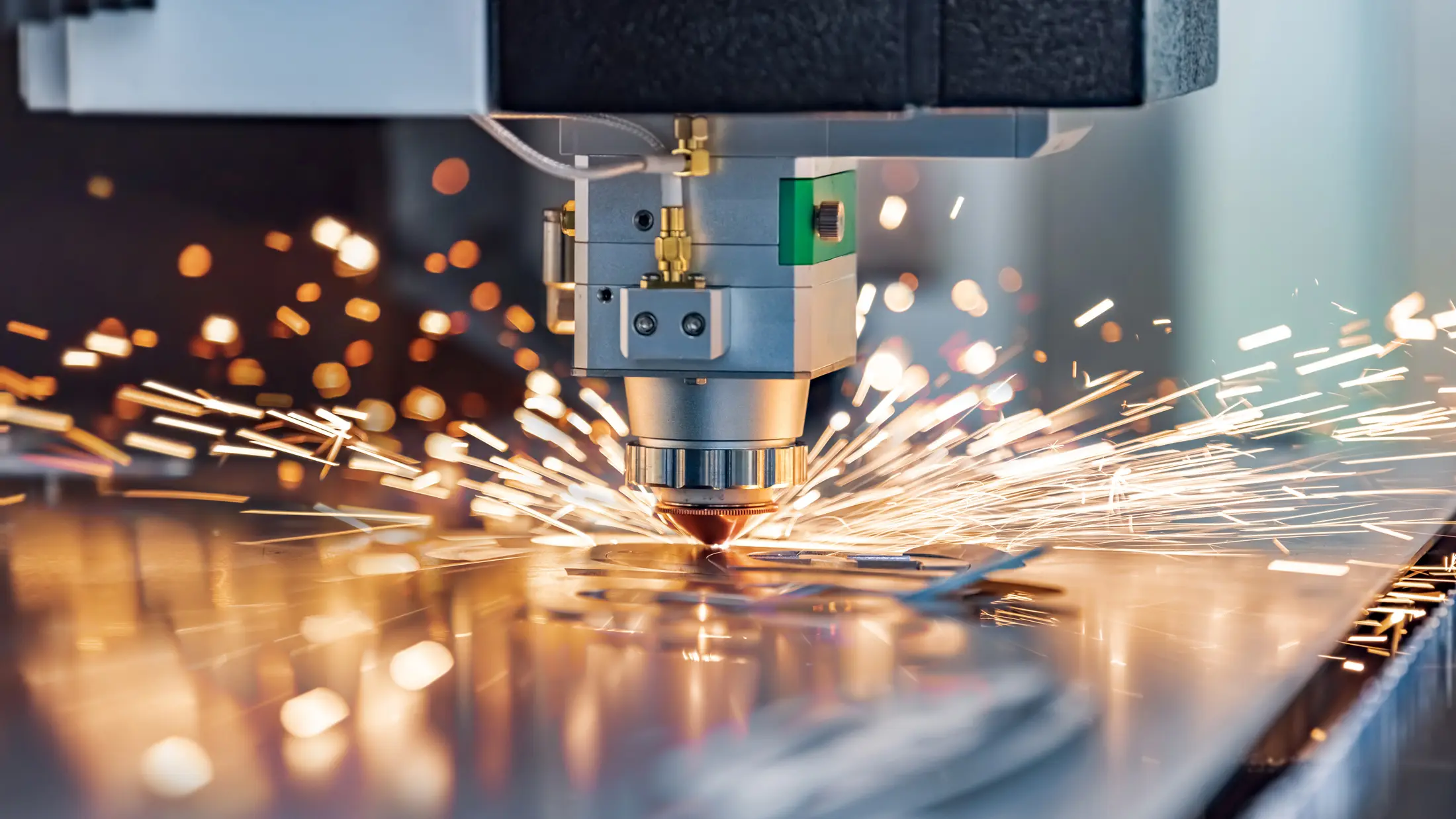
Most modern subcontractors use fibre laser technology due to its higher cutting speeds and improved energy efficiency compared to older CO₂ laser systems. Larger profiling companies may operate both technologies and advise on the most suitable option based on material thickness and application.
Where Can I Find a Laser Cutting Service Near Me?
There are many laser cutting companies operating across the UK and Ireland, with particularly high concentrations in manufacturing regions such as the Midlands.
A simple search for “CNC laser cutting service UK” will return a wide range of suppliers. Mapping tools can also help identify services close to your facility, which is often important when considering transport costs and lead times.
Alternatively, we have an extensive database of customers across the UK, so we probably know someone local to you, and can introduce you.
When selecting a subcontractor, consider the following:
-
Geographic proximity to reduce transport costs and delays
-
Capacity and workload, particularly during busy periods
-
Willingness to accommodate changes or urgent jobs
-
Transparency in pricing and material sourcing
A supplier operating at maximum capacity may struggle to accommodate short lead times or last-minute changes, which can quickly disrupt your own production schedules.
Benefits of Using External Laser Cutting Services
Practical and Straightforward
With drawings and specifications prepared, quotes can often be generated quickly using CAD and CAM software. These systems calculate cutting time, machine overheads and material costs with reasonable accuracy.
Once an order is placed, the responsibility for cutting, handling and delivery sits with the subcontractor, allowing you to focus on other areas of production.
Access to Expertise
Laser cutting is a skilled process. Subcontract services offer experienced operators who understand cutting parameters, material behaviour and secondary finishing requirements. This expertise can be valuable, particularly for complex or one-off jobs.
No Initial Investment
One of the most obvious advantages is avoiding capital expenditure. CNC cutting machines can range from approximately £50,000 to £500,000 depending on technology, size and capability.
No Maintenance or Training
Machine ownership involves ongoing costs beyond the purchase price. Outsourcing removes the need to manage servicing, consumables and operator training.
How Much Do External Laser Cutting Services Really Cost?
At first glance, outsourced laser cutting can appear straightforward. You receive a quote, place an order, and pay for the work completed. In practice, the true cost is often spread across multiple areas, some of which are not immediately obvious.
When evaluating external laser cutting services, it is important to look beyond the headline cutting rate and consider the total cost of ownership of the outsourced process.
Base Cutting Charges
Most industrial laser cutting services charge on an hourly machine rate. This varies depending on material type, thickness, batch size and part complexity, as well as whether any secondary operations are required.
As a general guide, standard subcontract laser cutting in the UK typically costs between £100 and £150 per cutting hour. While this figure is easy to compare between suppliers, it represents only part of the overall cost.
Material Costs and Mark-Ups
In many cases, laser cutting services prefer to supply the raw material themselves. This simplifies their workflow but can result in higher material costs for the customer.
Material prices included in subcontract quotes may not reflect the best available market rates, and you also lose the opportunity to standardise grades, finishes or suppliers across your wider production process.
Over time, material mark-ups can contribute significantly to the total cost of outsourced cutting.
Transportation and Handling
Cut parts must be moved from the subcontractor’s facility to yours. Whether transport is included in the quotation or arranged separately, it represents a recurring cost.
Longer distances increase the risk of delays, damage in transit and scheduling issues. In some cases, savings made on cutting rates are easily offset by transportation expenses alone.
Lead Times and Lost Productivity
One of the most overlooked costs of outsourcing is time.
External suppliers operate to their own schedules and capacity constraints. During busy periods, lead times can extend unexpectedly, delaying downstream processes such as folding, welding, coating or assembly.
These delays can create knock-on effects throughout your production schedule, tying up labour, pushing back delivery dates and, in some cases, risking customer relationships.
Urgency and Priority Charges
Standard pricing is usually based on standard lead times. If an urgent job is required or an existing order needs to be changed at short notice, additional charges are common.
These premiums are rarely visible in initial cost comparisons but can quickly accumulate, particularly in fast-moving production environments.
Storage and Logistics
If parts are completed but cannot be delivered immediately due to space, scheduling or production constraints, storage fees may apply.
Even when storage is not charged directly, managing deliveries, paperwork and handling still consumes internal time and resource.
Quality Control and Rework
Outsourcing also moves quality control outside your direct supervision. While most subcontractors work to high standards, any issues require rework, reordering or adjustment.
This introduces further delays and administrative effort, all of which carry a cost that is rarely reflected in the original quotation.
Understanding the True Cost
When all of these factors are considered together, the true monthly cost of outsourced laser cutting is often far higher than expected.
This is why many manufacturers find that once external laser cutting spend approaches or exceeds £1,500 per month, investing in an in-house CNC cutting machine becomes not only viable but financially advantageous.
Are Plasma Cutting Services a Better or Cheaper Alternative?
For some applications, plasma cutting can offer a cost-effective alternative to laser cutting, particularly for thicker materials.
Modern plasma systems produce smooth cut edges on thick mild steel and can outperform lasers in terms of thickness capability. However, laser cutting typically delivers superior hole quality and finer detail, especially on thinner materials.

Fewer companies offer subcontract plasma cutting compared to laser cutting, as plasma machines are often prioritised for in-house production rather than subcontract work.
For businesses with regular cutting requirements, investing in a plasma cutting machine can be a highly economical solution.
Which CNC Metal Cutting Machine Should I Buy?
The answer like many things is “It depends”. The right machine depends entirely on your materials, thickness range and production volumes.
Laser cutting offers high precision and flexibility, while plasma cutting excels on thicker materials at lower operating cost. For many manufacturers, plasma often becomes more economical above 10 mm thickness unless fine detail is required.
The best way to determine the right solution is through a site visit and consultation with a machinery specialist who understands your workflow.
Understanding the True Cost of Machine Ownership
Electricity
Energy consumption varies by technology. Fibre lasers are significantly more efficient than CO₂ lasers, and power requirements increase with cutting capacity.
Assist Gas Supply
Laser cutting typically uses oxygen or nitrogen. As thickness and cutting volume increase, gas consumption rises. For high nitrogen usage, installing an on-site nitrogen generator can dramatically reduce operating costs.
Staffing and Training
Modern machines are designed to be user-friendly, but operators still require time to become confident and efficient. Strong supplier support and intuitive controls reduce training time significantly.
Maintenance
Fibre lasers generally have low routine maintenance requirements. Scheduled servicing remains essential to ensure long-term reliability and performance.
Material Selection
Following manufacturer recommendations for material quality helps maintain consistent cut results and minimise downtime.
Conclusion: What Is Best for Your Business?
Outsourcing laser cutting can be a practical and cost-effective solution for businesses with infrequent or low-volume cutting requirements. It avoids capital investment and provides access to specialist expertise.
However, as cutting volumes increase, the drawbacks become more apparent. Lead times, pricing structures and lack of flexibility can restrict growth and profitability.
Owning your own CNC cutting machine provides control, speed and long-term cost savings. For many manufacturers, once monthly outsourcing costs exceed £1,500, bringing laser cutting in-house is not just viable but commercially sensible.
The key is choosing the right technology and the right partner to support your investment for years to come.
Unsure of whether bringing laser cutting in-house would suit your business?
Published 19th December 2025